Key Elements of Successful Novel-to-Drama Adaptations
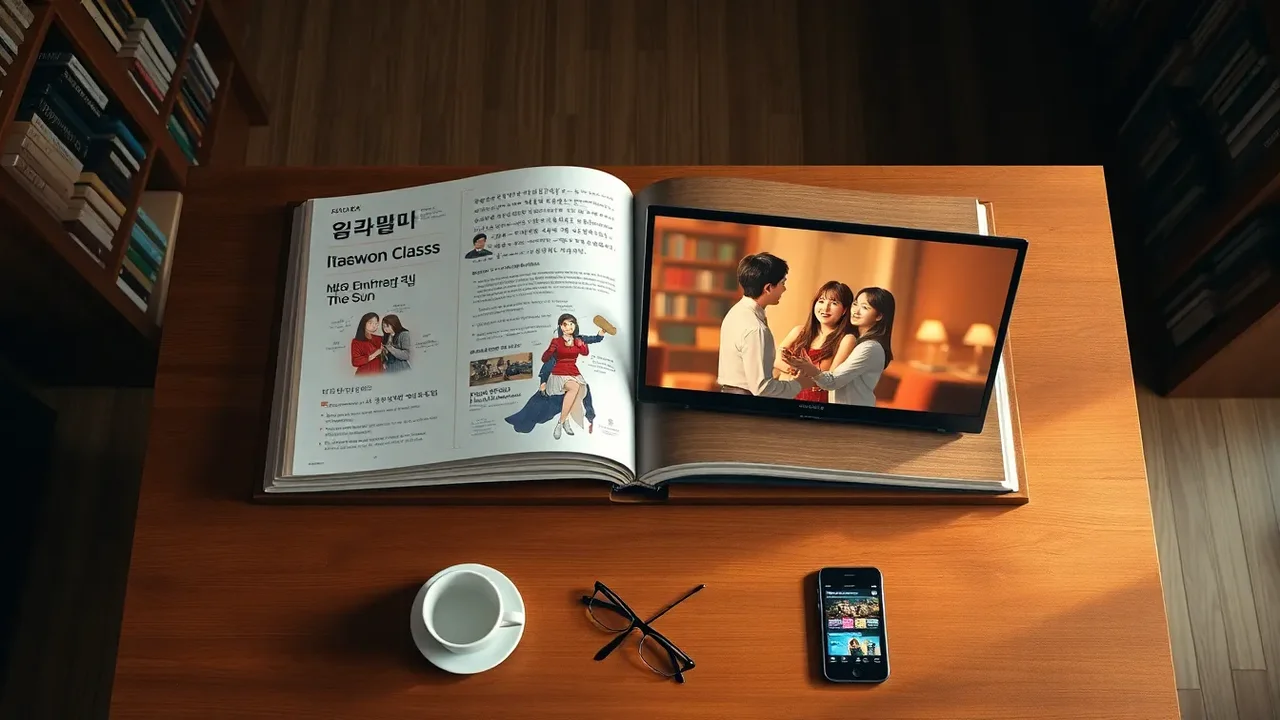
Adapting a beloved novel into a K-drama requires a delicate balance of fidelity and creative freedom. The most successful adaptations share several core elements that resonate with both readers and new audiences. First, character depth must be preserved. Readers form strong attachments to characters, so drama scripts often expand backstories or internal monologues through visual storytelling. For example, in 'It's Okay to Not Be Okay' (based on a novel by Jo Yong), the protagonist's traumatic past is shown through dream sequences and symbolic imagery, adding layers not present in the text. Second, pacing tailored to episodic format is crucial. Novels can linger on inner thoughts, but dramas must maintain momentum. Adaptations like 'The King's Affection' (from a web novel) restructure plot arcs to fit 20-episode runs, ensuring cliffhangers at each break. Third, visual and auditory world-building elevates the source material. The drama 'A Piece of Your Mind' (adapted from a novel) uses color palettes and a custom soundtrack to evoke the melancholic tone of the book. Finally, respect for core themes while updating social context is key. 'Love Alarm' (based on a web novel) modernizes its exploration of technology and love, making it relevant to contemporary viewers. Below is a list of essential ingredients that drama producers consider when adapting a novel:
- Faithfulness to the spirit of the story – even if plot details change, the emotional journey must remain intact.
- Strong casting choices – actors who embody the imagined characters, as seen with Kim Soo-hyun in 'Moon Embracing the Sun' (adapted from a novel).
- Efficient trimming of subplots – secondary storylines that don't advance the main narrative are often condensed or removed to avoid screen clutter.
- Incorporation of fan feedback – many productions adjust scripts based on early reactions during broadcasting, especially for live-shoot dramas.
- Use of iconic book moments as set pieces – recreating memorable scenes, like the umbrella scene in 'The Time We Were Not in Love' (adapted from a Taiwanese novel), brings nostalgia for readers.
Notable K-Drama Novel Adaptations: A Comparative Table
To understand the diversity of adaptations, the following table highlights several prominent K-dramas based on novels, web novels, or manhwa (Korean comics) that have been adapted into live-action series. The table includes the original work, the drama title, year of release, and key differences between the novel and the screen version.
| Novel Title | Author | Drama Title | Year | Key Differences | Reception |
|---|---|---|---|---|---|
| Moon Embracing the Sun | Jung Eun-gwol | Moon Embracing the Sun | 2012 | The novel has a more detailed political intrigue; the drama focuses on the romance. | Highly acclaimed; peak ratings of 42.2% |
| Love in the Moonlight | Yoon Yi-soo (web novel) | Love in the Moonlight | 2016 | Drama added a male lead character not in the original; expanded comedic elements. | Popular; boosted Park Bo-gum's career |
| Cheese in the Trap | Soonkki (webtoon) | Cheese in the Trap | 2016 | Drama altered the ending and character motivations, leading to dissatisfaction among readers. | Mixed; controversy over finale |
| The Legend of the Blue Sea | Based on a Korean folktale (adapted into a novel) | The Legend of the Blue Sea | 2016 | Drama modernized the historical setting and added a reincarnation plot. | High ratings; praised for Jun Ji-hyun's performance |
| Itaewon Class | Gwang Jin (webtoon) | Itaewon Class | 2020 | Drama streamlines the revenge plot and adds a love triangle, while the webtoon is more focused on business growth. | Critical and commercial success; global hit on Netflix |
| All of Us Are Dead | Joo Dong-geun (webtoon) | All of Us Are Dead | 2022 | Drama expands the zombie outbreak and changes character deaths; the webtoon ends differently. | Popular; renewed for season 2 |
Behind the Scenes: The Adaptation Process
Creating a K-drama from a novel is a multi-step process that involves collaboration between the original author, scriptwriters, directors, and producers. Typically, the rights to a novel are acquired by a production company, often after the novel achieves bestseller status or has a strong fanbase. The scriptwriting stage is the most critical: writers must decide how to translate internal monologues into dialogue and action. For instance, in 'The Good Detective' (based on a novel), the protagonist's investigative thoughts are conveyed through phone calls and partner interactions. Drafting and revisions can take months, with producers often consulting the author to ensure key plot points are preserved. However, not all authors are involved; some sell full creative control. A notable example is 'The K2', which was originally a novel but the drama took significant liberties, resulting in a different storyline. Location scouting and set design also draw from the novel's descriptions. The drama 'When the Camellia Blooms' (based on a novel) recreated the small-town atmosphere described in the book by filming in actual rural areas of Korea. Budget constraints often force changes: fantasy elements from novels like 'The Bride of Habaek' (adapted from a webtoon) may be scaled down due to CGI costs. Additionally, cultural adaptation is sometimes necessary when the novel has historical or regional specifics that need to be updated for modern audiences. For example, 'The Crowned Clown' (based on a novel) reimagined the historical setting to align with contemporary political themes.
Impact on Readers and Viewers
Novel-to-drama adaptations significantly influence both the book market and the drama industry. Book sales often surge after a drama announcement. For instance, the webtoon 'Itaewon Class' saw a 300% increase in readership after the drama aired. Similarly, physical copies of 'Moon Embracing the Sun' became bestsellers in Korea years after its initial publication. This phenomenon, known as the 'drama effect', benefits publishers and authors. On the viewer side, adaptations often create a dual audience: existing fans of the novel bring built-in anticipation, while new viewers discover the story through the screen. This can lead to cross-cultural exchanges, as seen with 'All of Us Are Dead', which introduced international audiences to the original webtoon. However, adaptation controversies are common. When a drama deviates too far from the source, loyal readers may express disappointment online, as happened with 'Cheese in the Trap' and 'The King's Avatar' (Chinese drama, but similar phenomenon). To mitigate backlash, some productions hold open casting calls and involve fan committees. For example, the drama 'True Beauty' (based on a webtoon) consulted fan forums during production. The economic impact is also notable: successful adaptations like 'Itaewon Class' boost tourism to filming locations and generate merchandise sales. In summary, the relationship between page and screen is symbiotic, with each medium enhancing the other's reach.
Challenges and Criticisms of Adaptations
Despite the successes, K-drama adaptations face recurring challenges. Condensing a lengthy novel into a 16-20 episode series often requires cutting beloved subplots. For example, the novel 'The Girl Who Sees Smells' had a complex detective story that was simplified in the drama. Changing character arcs can alienate fans. In 'Love in the Moonlight', the drama added a love triangle that was not in the original web novel, causing some readers to feel the story was diluted. Pacing issues arise when the first half of the drama closely follows the book but the second half veers off due to time constraints. The drama 'My ID is Gangnam Beauty' (based on a webtoon) was criticized for its rushed ending compared to the source material. Cultural and censorship issues also affect adaptations. Some novels contain mature themes that need to be toned down for television broadcast regulations. For instance, the webtoon 'Sweet Home' had graphic violence that was softened in the Netflix drama. Fan expectations can be unrealistic; readers often have vivid mental images of characters and settings, and any casting or visual mismatch leads to backlash. The drama 'The Uncanny Counter' (based on a webtoon) faced criticism for its casting of certain actors not matching the graphic novel's art style. Lastly, intellectual property disputes occasionally occur when multiple production companies claim rights, as seen with the novel 'The Light in Your Eyes' which was adapted into a drama but later faced legal issues over screenplay ownership. Despite these hurdles, the trend of novel adaptations continues to grow, with producers increasingly relying on established IP to reduce risk.
FAQ – From Page to Screen: Top K-Drama Novel Adaptations
What are the most popular K-drama adaptations of novels?
Some of the most popular K-drama adaptations include 'Moon Embracing the Sun' (based on the novel by Jung Eun-gwol), 'Itaewon Class' (based on a webtoon), 'Love in the Moonlight' (web novel), 'All of Us Are Dead' (webtoon), and 'The Crowned Clown' (based on a novel). These dramas garnered high ratings and international acclaim.
How faithful are K-drama adaptations to the original novels?
Faithfulness varies widely. Some adaptations, like 'Moon Embracing the Sun', stay relatively close to the source, while others, like 'Cheese in the Trap', significantly alter plot points and character endings. Often, producers prioritize dramatic pacing and visual appeal over strict fidelity, which can lead to mixed reactions from readers.
Do K-drama adaptations boost book sales?
Yes, significantly. The 'drama effect' often leads to a surge in sales of the original novel or webtoon. For instance, 'Itaewon Class' saw a 300% increase in webtoon readership after the drama aired, and physical copies of 'Moon Embracing the Sun' became bestsellers years after initial publication.
What challenges do producers face when adapting a novel into a K-drama?
Key challenges include condensing lengthy novels into 16-20 episodes, managing fan expectations, dealing with budget constraints for special effects, navigating cultural censorship, and resolving intellectual property disputes. Pacing and character development often require creative compromises.
Are there any K-drama adaptations that were better than the novel?
Opinions vary, but some adaptations are praised for enhancing the story. For example, 'Itaewon Class' added a love triangle that many viewers found compelling, and 'The Crowned Clown' expanded the political intrigue beyond the novel. However, book purists often prefer the original. Ultimately, it depends on personal taste.
How do K-drama adaptations differ from Western adaptations?
K-dramas typically have shorter episode counts (16-20 vs. 8-10 for Western series) and often release episodes weekly. They also tend to be more faithful to source material in terms of romantic subplots, but may take more liberties with genre elements. Additionally, K-dramas frequently adapt webtoons and web novels, which are more interactive and have active fan communities influencing production.
From Page to Screen: Top K-Drama Novel Adaptations explores how beloved Korean novels and webtoons are transformed into hit TV series. It covers key elements of successful adaptations, notable examples, production challenges, and the impact on book sales. Discover the balance between fidelity and creative freedom in this growing trend.
In conclusion, the journey from page to screen in K-drama adaptations is a dynamic and evolving process that bridges the literary and visual worlds. These adaptations not only breathe new life into beloved stories but also introduce them to global audiences, fostering cultural exchange and creative innovation. While challenges remain—such as balancing fidelity with dramatic needs and managing fan expectations—the success of hits like 'Itaewon Class' and 'Moon Embracing the Sun' proves that when done thoughtfully, novel-to-drama adaptations can become cultural phenomena in their own right. As the K-drama industry continues to expand internationally, the trend of adapting novels is likely to flourish, offering viewers a rich tapestry of stories that honor their origins while embracing the magic of cinema.