Historical Origins of the Goblin in Folklore
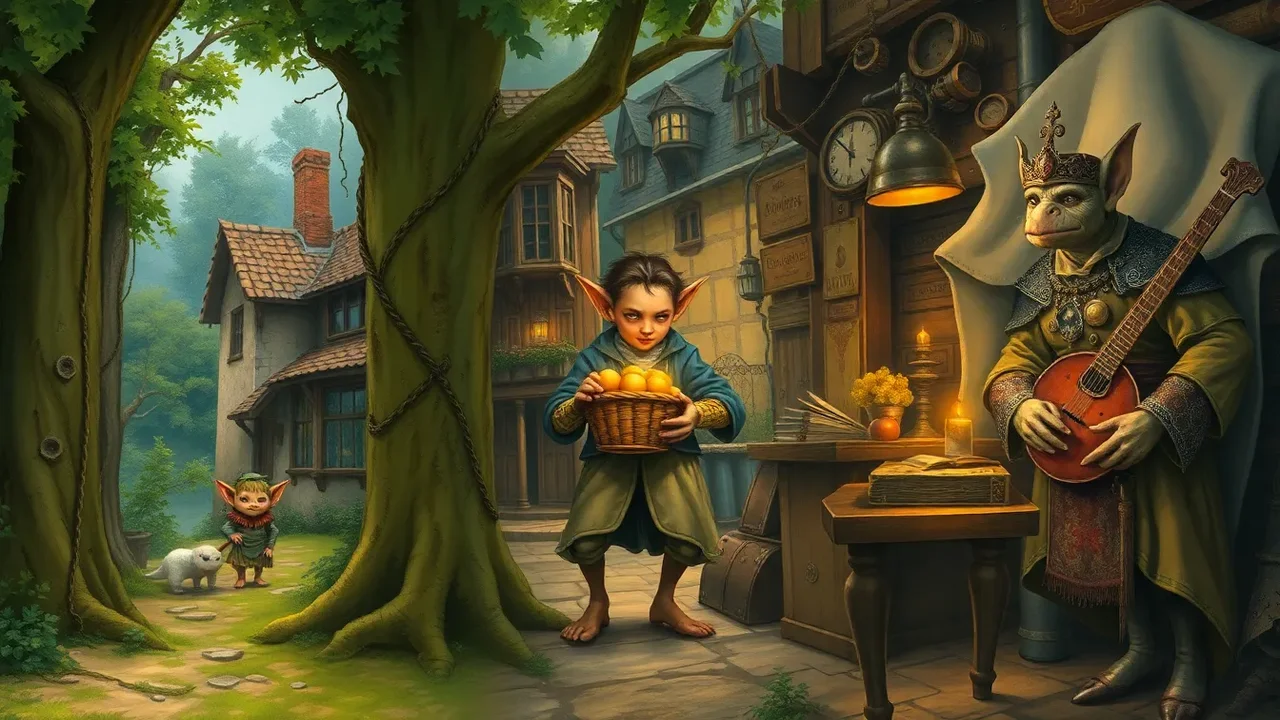
The goblin, as a creature of myth, finds its earliest roots in the folklore of medieval Europe, particularly in the British Isles, France, and Germany. The term “goblin” itself is believed to derive from the Old French gobelin, which was used to describe a mischievous or malevolent spirit. These early goblins were not the organized, industrial creatures of modern fantasy but rather solitary tricksters who haunted homes, forests, and mines. In English folklore, goblins were often associated with household chores gone wrong—they would sour milk, hide objects, or lead travelers astray. Unlike the more refined fairies of the Seelie Court, goblins were considered unseelie, meaning they were dangerous and capricious. The Chaucer and Shakespeare eras saw goblins appear in literature as minor characters, such as the sprite in A Midsummer Night's Dream, though their modern form was still developing.
Goblin Traits in Early Mythology
Early goblins were distinguished by their physical ugliness, small stature, and tendency to laugh maliciously. They were often depicted as having sharp teeth, pointed ears, and a taste for human flesh or trickery. In Norse mythology, the troll and dwarf share some characteristics with goblins, but the goblin remained a distinct entity in Celtic lore. The Irish púca and the Scottish brownie are cousins to the goblin, but the goblin is more consistently evil. One of the earliest recorded uses of the word “goblin” in English literature is in the 14th-century poem Sir Gawain and the Green Knight, where the Green Knight is sometimes described with goblin-like qualities. However, it was in the 19th century that the goblin began to take on the form we recognize today, thanks to authors like George MacDonald and Christina Rossetti. Rossetti's Goblin Market (1862) is a seminal work that portrays goblin men as seductive merchants selling forbidden fruit, blending folklore with Victorian morality.
Literary Evolution: From Folklore to Fantasy Novels
The transition of the goblin from folklore to the novel form is a fascinating journey. In the late 19th and early 20th centuries, fantasy authors began to systematize mythical creatures. J.R.R. Tolkien is perhaps the most influential figure in shaping the modern goblin. In The Hobbit (1937) and The Lord of the Rings, Tolkien used the term “goblin” interchangeably with “orc” for the smaller, more brutish creatures, though he later distinguished them. His goblins are cunning, cruel, and industrial, living in caves and mines. This industrial aspect—goblins as technologists of darkness—became a staple. Later, Dungeons & Dragons (1974) codified goblins as a low-level humanoid race with a tribal structure, further solidifying their role in fantasy. In the 21st century, novels such as Terry Pratchett's Discworld series reimagined goblins as oppressed minorities, exploring themes of prejudice and industrial revolution. Jim Butcher's Dresden Files features goblins as part of the Nevernever, while Brandon Sanderson's Mistborn and Stormlight Archive include goblin-like creatures called singer or spren that echo goblin traits. The goblin's novel roots are thus deeply intertwined with the development of the fantasy genre itself.
Key Characteristics of Goblins in Modern Novels
Modern literary goblins share a set of common traits, though variations exist. Below is a table summarizing these characteristics as seen in notable works:
| Trait | Description | Example in Novels |
|---|---|---|
| Physical Appearance | Small stature, green or gray skin, pointed ears, sharp teeth, large eyes. | Tolkien's goblins in The Hobbit are described as “squat and broad” with “swarthy faces.” |
| Behavior | Mischievous, cruel, greedy, often cowardly but dangerous in groups. | Pratchett's goblins in Unseen Academicals are tricksters and scavengers. |
| Social Structure | Tribal, with a chieftain or king; often live in caves, mines, or underground. | In Dungeons & Dragons novels, goblins have a hierarchy based on strength. |
| Magical Abilities | Some can use minor magic, curses, or illusions; others are purely mundane. | Rossetti's goblin men use magic to lure maidens with fruit. |
| Relationship with Humans | Generally hostile or indifferent; sometimes serve as minions to greater evils. | In Harry Potter, goblins run Gringotts bank and are wary of wizards. |
Notable Novels Featuring Goblins: A Deeper Examination
To understand the novel roots of goblins, we must examine specific works that have defined or subverted the archetype. Below is a list of influential novels and their unique contributions:
- Goblin Market by Christina Rossetti (1862) – This narrative poem, often considered a novel in verse, presents goblins as seductive, fruit-selling creatures. Their “come buy, come buy” chant is a cautionary tale about temptation. The goblins are neither fully evil nor fully good; they represent the dangers of consumerism and desire.
- The Hobbit by J.R.R. Tolkien (1937) – Goblins (orcs) are the primary antagonists in the Misty Mountains. They are cruel, inventive, and obsessed with machinery. Tolkien's goblins are a reflection of industrial warfare, with their “goblin-men” building tunnels and weapons.
- Goblins in the Castle by Bruce Coville (1992) – A children's novel that reimagines goblins as friendly, helpful creatures who simply look ugly. They are magically bound to a castle and help the protagonist defeat a villain. This work subverts the traditional evil goblin trope.
- Unseen Academicals by Terry Pratchett (2009) – Part of the Discworld series, this novel features goblins as a marginalized race. Pratchett uses them to explore themes of racism, social mobility, and the value of creativity. The goblin Nutt is a brilliant inventor and a key character.
- The Goblin Emperor by Katherine Addison (2014) – A political fantasy novel where the protagonist, a half-goblin, becomes emperor. The goblins here are a distinct ethnicity with their own culture, language, and history. This novel is a deep dive into goblin society, showing them as complex beings rather than monsters.
- Goblin Slayer by Kumo Kagyu (2016, light novel series) – A dark fantasy series that focuses on the brutal reality of goblin raids. Goblins are depicted as cunning, reproductive, and highly dangerous. The series deconstructs the trope of goblins as weak enemies, emphasizing their threat.
Thematic Depth: What Goblins Represent in Literature
Goblins are not just monsters; they are narrative devices that carry deep symbolic weight. In many novels, goblins represent the other—the marginalized or feared group. Their ugliness and savagery are often metaphors for societal prejudices. For example, in The Goblin Emperor, the protagonist's goblin heritage is a source of discrimination, and the novel explores how power can overcome bigotry. In Goblin Market, the goblins are associated with forbidden fruit and sexual temptation, reflecting Victorian anxieties about female desire. In Goblin Slayer, the goblins embody chaotic evil and the fear of the unknown, pushing the protagonist to extreme measures. Additionally, goblins often serve as a foil to human characters, highlighting what is considered civilized versus barbaric. Their industrial traits in Tolkien's work critique the dehumanizing effects of technology. Thus, the goblin's novel roots are intertwined with cultural commentary, making them more than mere plot devices.
Practical Information for Writers and Enthusiasts
If you are a writer looking to include goblins in your novel, consider the following practical tips based on literary precedents: First, decide on the tone—comedic, dark, or sympathetic. Pratchett used humor to discuss serious issues, while Kagyu used horror. Second, develop a culture for your goblins. Give them language, customs, and a history. Avoid relying solely on the “evil tribe” trope. Third, consider their relationship with magic. Some goblins are innate spellcasters, others are technologists. Fourth, think about their physical limitations. In many novels, goblins are weaker than humans but compensate with numbers, traps, or cunning. Fifth, use goblins to examine themes such as prejudice, survival, or industrialization. A well-crafted goblin character can be as memorable as any human hero. Finally, study the roots: read the works listed above to see how different authors have handled the same creature. The goblin's novel roots are rich and varied; drawing from them can add depth to your own story.
FAQ - Goblin's Novel Roots: A Deeper Look
What is the origin of the word 'goblin'?
The word 'goblin' likely comes from the Old French 'gobelin', which referred to a mischievous spirit. It may also be related to the German 'kobold', a household spirit, and the Latin 'cobalus' (from Greek 'kobalos', meaning a rogue or imp).
How did J.R.R. Tolkien influence the modern goblin archetype?
Tolkien's goblins in 'The Hobbit' and 'The Lord of the Rings' are cruel, industrial creatures who live in caves and serve the Dark Lord. He popularized the idea of goblins as a race of brutish, crafty minions, shaping later fantasy novels and games.
Are goblins always evil in literature?
No. While many traditional portrayals cast goblins as evil, modern novels like 'The Goblin Emperor' by Katherine Addison and 'Goblins in the Castle' by Bruce Coville depict them as complex, sympathetic, or even heroic characters.
What is the significance of goblins in Christina Rossetti's 'Goblin Market'?
The goblins in 'Goblin Market' represent temptation, consumerism, and sexual desire. They seduce young women with luscious fruit, serving as a Victorian allegory for the dangers of giving in to forbidden pleasures.
Can goblins be used in non-fantasy genres?
Yes, goblins can appear in horror, steampunk, or even comedic fiction. Their versatility allows authors to explore themes of otherness, technology, or societal fear. For example, 'Goblin Slayer' is a dark fantasy horror, while Terry Pratchett's goblins are satirical.
What are common physical traits of goblins in novels?
Common traits include small stature (often three to four feet tall), green or gray skin, pointed ears, large eyes, sharp teeth, and a hunched posture. They are often depicted as ugly, dirty, and wearing rags or crude armor.
Goblin's Novel Roots: A Deeper Look explores the evolution of goblins from medieval folklore to modern novels, tracing their transformation through key works like 'Goblin Market', 'The Hobbit', and 'The Goblin Emperor'. It examines physical traits, thematic roles, and cultural significance, offering practical insights for writers and enthusiasts.
In summary, the goblin's novel roots stretch back through centuries of folklore, evolving from a simple household trickster into a multifaceted literary figure. From the cautionary verses of Rossetti to the political depths of Addison, the goblin serves as a mirror for human fears, prejudices, and aspirations. Whether as a villain, a misunderstood outcast, or a symbol of industrial dread, the goblin remains a vital and flexible creature in the fantasy genre. Understanding these roots enriches both reading and writing, reminding us that even the most monstrous of beings can have stories worth telling.