Why Korean Novels Are Goldmines for Drama Adaptations
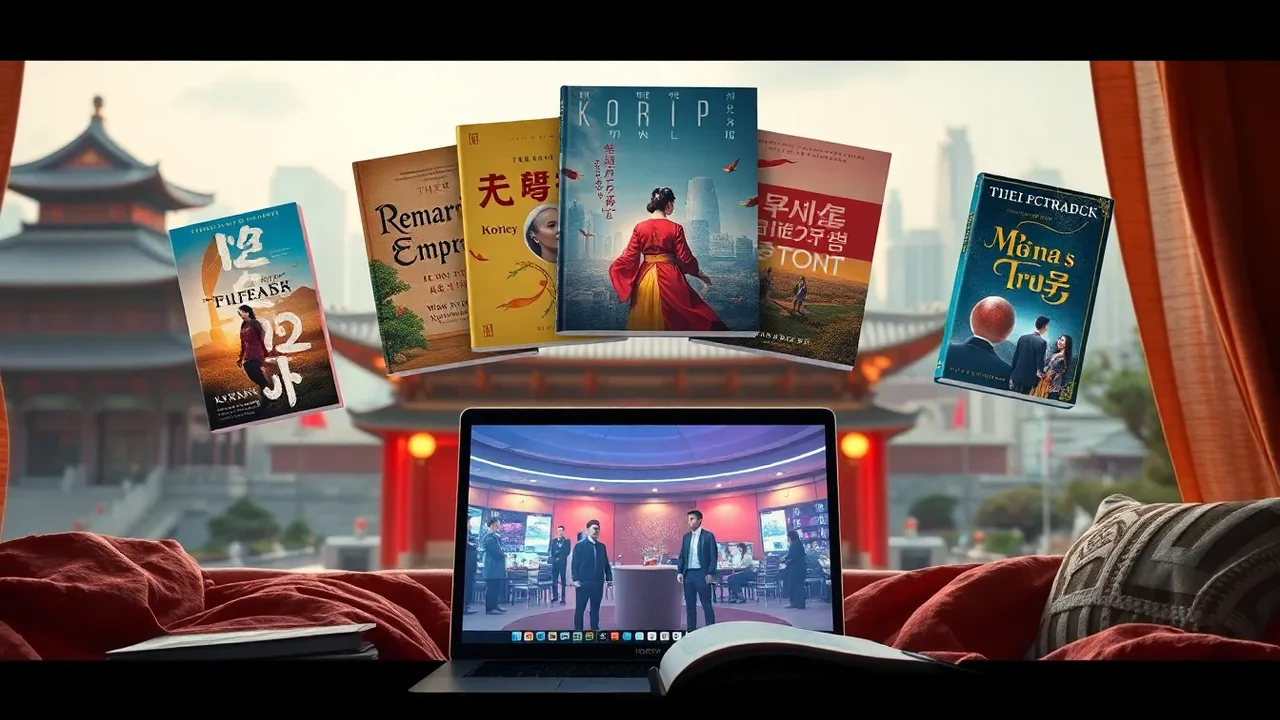
Korean web novels and traditional novels have become a treasure trove for K-drama producers. With intricate plots, deep character development, and rich world-building, these stories offer a ready-made blueprint for compelling television. Over the years, hits like What's Wrong with Secretary Kim and The King's Affection proved that novel-to-drama transitions can lead to massive global success. Yet many exceptional novels remain unadapted, waiting for the right production team to bring them to life. The growing international appetite for K-content, especially through streaming platforms, makes this the perfect moment to explore which novels deserve the spotlight.
Top K-Drama Novels That Need a Live-Action Series
The Remarried Empress
Originally a web novel, The Remarried Empress follows Navier, a perfect empress who is divorced by her unfaithful emperor husband. She then remarries a foreign emperor, leading to political intrigue and romance. The story’s feminist undertones, complex relationships, and lavish palace settings are ideal for a historical fantasy drama. The novel’s webtoon adaptation already attracted millions of readers, but a live-action K-drama could amplify its emotional impact with stellar acting and cinematography. The slow-burn romance between Navier and her new husband Heinrey offers a refreshing take on arranged marriages.
Omniscient Reader's Viewpoint
This web novel is a genre-defining blend of action, fantasy, and meta-commentary. It tells the story of Kim Dokja, an office worker who finds himself inside a novel he was reading, as apocalyptic events unfold. The narrative is layered with plot twists, alternate timelines, and philosophical questions about fate and storytelling. Adapting this into a drama would require cutting-edge visual effects and a strong ensemble cast. The potential for season-long arcs is enormous, making it a perfect candidate for a high-budget series. The loyal fanbase would guarantee initial viewership, and its crossover appeal could attract international audiences.
Villains Are Destined to Die
Penelope Eckhart, a villainess trapped in a survival game, must win the affection of male leads to avoid a tragic death. The reverse-harem elements, psychological tension, and regency-like aesthetics make this a natural fit for a Korean drama. The novel’s popularity on platforms like Ridibooks shows a clear demand. A live-action adaptation could explore themes of redemption and self-worth. The costumes and set design would be opulent, and the multiple love interests provide ample shipping material for viewers. The series could handle mature storylines without devolving into clichés, especially with a strong female lead.
Who Made Me a Princess
This heartwarming fantasy novel follows Athanasia, a woman reincarnated as the daughter of a cold emperor who killed her in the original story. She must survive and win her father’s love to change her fate. The blend of comedy, family bonding, and magical elements is reminiscent of hit dramas like The Legend of the Blue Sea. The novel’s emotional core—a father-daughter relationship—could translate beautifully on screen. The gradual character development of the emperor from a tyrant to a caring father would give actors a challenging and rewarding role. The story also includes time travel and palace intrigue, offering plot diversity.
A Stepmother's Märchen
Shuri, a young widow, becomes the stepmother of three children after her husband’s death. The story explores her struggles as a single parent in a historical fantasy world, handling trauma and social norms. The novel is praised for its nuanced portrayal of family dynamics and slow-burn romance. A drama adaptation could focus on the emotional depth and showcase beautiful historical costumes. The children characters offer opportunities for young actors, and the romantic subplot with the knight Noel is tender and compelling. The setting of a noble household in a fictional empire allows for creative world-building without overtaxing budgets.
Factors That Make a Novel Adaptation Successful
- Strong Original Storyline: Novels with clear narratives, pacing, and satisfying arcs provide a solid foundation. Complex plots need careful condensation to fit episode formats.
- Character Depth: Readers bond with detailed inner monologues. Screenwriters must visually translate that depth through actions and dialogue.
- Loyal Fanbase: Established novels bring built-in audiences, but expectations must be managed to avoid backlash. Involving original authors can help.
- Visual Appeal: Settings like palaces, magical realms, or historical locations should be visually striking. High production value is crucial.
- Cultural Relevance: Themes that resonate with modern viewers—like female empowerment, mental health, or chosen families—increase engagement.
- Adaptation Flexibility: Novels that allow for extended episode counts (16-20 episodes) without filler are ideal. Multi-season potential is a bonus.
Comparison of Notable Novel Candidates
| Novel Title | Genre | Episode Estimate | Likely Air Date | Streaming Potential |
|---|---|---|---|---|
| The Remarried Empress | Historical Romance | 16-20 | 2025-2026 | High (Netflix, Disney+) |
| Omniscient Reader's Viewpoint | Action Fantasy | 24-32 (multiple seasons) | 2026-2027 | Very High (Netflix) |
| Villains Are Destined to Die | Reverse Harem Fantasy | 12-16 | 2025 | High (Viki, Kocowa) |
| Who Made Me a Princess | Fantasy Comedy | 16-24 | 2027 | Moderate (KBS, Netflix) |
| A Stepmother's Märchen | Historical Family Drama | 16-20 | 2026 | Medium (TVING, Paramount+) |
The Role of Fan Communities in Pushing for Adaptations
Online fandom plays a crucial role in advocating for novel-to-drama transitions. Platforms like Twitter, Reddit, and Naver Cafe buzz with fan-casting suggestions and petition threads. When The Remarried Empress fans mobilized, major studios took notice. The same happened for Who Made Me a Princess. Producers now monitor social media trends to gauge demand. Additionally, fan translations of web novels into English and other languages expand global reach, making adaptation more attractive to international streaming services. However, producers must balance fan expectations with creative vision. Not every fan request is feasible, but ignoring the audience entirely can doom a project early.
Challenges in Adapting Novels to Screen
Adapting a beloved novel into a K-drama is fraught with obstacles. One major challenge is pacing. Web novels often have slow narrative buildup with extensive inner monologues. Screenwriters must condense without losing essence. For example, Omniscient Reader's Viewpoint contains dozens of chapters of exposition. A drama might need non-linear storytelling or visual montages to maintain momentum. Another issue is character depth. In novels, readers access characters’ thoughts directly. In drama, actors and directors must convey that through subtle facial expressions and dialogue. Casting the right lead is critical; a miscast can ruin a franchise. Furthermore, budget constraints limit special effects for fantasy worlds. Villains Are Destined to Die requires multiple lavish costumes and magical effects, which may be expensive. Some novels have mature themes (violence, romance) that need careful handling to meet Korean broadcast standards. Additionally, fan backlash is always a risk. Changes to plot or characterization can alienate the core readership. Producers often negotiate with the original author to maintain narrative integrity while allowing for necessary modifications.
Overcoming Length Issues
Many web novels are extremely long, spanning hundreds of chapters. To adapt them, writers may split the story into multiple seasons or create a condensed single-season version. For instance, A Stepmother's Märchen could be filmed in 16 episodes covering the first arc, leaving room for a second season if successful. Alternatively, producers can use a movie-drama hybrid format—like The Moon That Embraces the Sun—to tell a complete story without overstretching. Another solution is to hire experienced showrunners who understand serialized storytelling. South Korea’s drama industry excels at long-format narratives, so it’s about matching the novel’s rhythm to the 16-episode standard.
Future Prospects for Novel-Based K-Dramas
The demand for fresh content continues to grow. Major studios like Studio Dragon, JTBC, and Netflix are actively scouting Korean web novels. In 2024 alone, over a dozen novel-based dramas were announced. This trend is expected to accelerate as AI and data analytics help identify the most adaptable stories. Moreover, the success of Business Proposal (based on a webtoon) and It's Okay to Not Be Okay (original) shows that source material popularity correlates with viewership. Novels with strong female protagonists and genre-blending elements are particularly sought after. The international market, especially in the US and Southeast Asia, is hungry for Korean fantasy and romance. With platforms like Netflix willing to invest $20-30 million per season, the ceiling for novel adaptations is high. The next few years will likely see a wave of these novels turned into global hits, cementing Korea’s status as a storytelling powerhouse.
FAQ - K-Drama Novels That Deserve Their Own Drama Adaptation
What makes a Korean novel suitable for a drama adaptation?
A suitable novel typically has a gripping plot, strong character arcs, and visual settings that can translate well to screen. It should also have a dedicated fanbase, potential for episodic storytelling, and themes that resonate with modern audiences. Factors like genre (fantasy, romance, historical) and length (enough content for 16-20 episodes) are also key.
Are there any Korean novels that have already been adapted into successful dramas?
Yes, many Korean dramas originate from novels or web novels. Examples include 'What's Wrong with Secretary Kim', 'The King's Affection', 'Moon Lovers: Scarlet Heart Ryeo' (based on a Chinese novel), and 'Bread, Love and Dreams' (based on a novel by Kim Mi-jung). These adaptations often become hits due to pre-existing fan interest.
How do producers choose which novels to adapt?
Producers look at factors like sales figures, online readership, community buzz, and the story's compatibility with broadcast or streaming formats. They also consider the availability of production budgets, especially for fantasy elements. Many studios work directly with web novel platforms like Munpia or Ridibooks to secure rights.
What are the biggest challenges in adapting a novel into a K-drama?
Key challenges include condensing lengthy stories into a limited episode count, maintaining character depth without internal monologues, managing fan expectations for fidelity, and budgeting for special effects or period costumes. Additionally, censorship and cultural sensitivities can require plot adjustments.
Can international fans influence which Korean novels get adapted?
Absolutely. International fan demand, shown through online petitions, social media campaigns, and fan translations, can attract attention from production companies. Global streaming platforms like Netflix consider global viewership data, so a novel with strong overseas following has higher chances of adaptation.
Are there any upcoming K-drama adaptations of novels confirmed?
As of mid-2025, several novel-based dramas are in production, including 'The Heavenly Idol' (based on a webtoon/novel) and adaptations of 'A Good Day to Be a Dog' (webtoon). For the novels mentioned in this article, none have official announcements yet, but fan campaigns and growing interest make them likely candidates for future development.
Several Korean novels, including The Remarried Empress, Omniscient Reader's Viewpoint, and Who Made Me a Princess, have strong potential for K-drama adaptation due to their compelling plots, large fanbases, and visual settings. This article explores why these novels deserve live-action series, the challenges of adaptation, and the role of fan communities in pushing for productions.
In conclusion, the landscape of K-drama is ripe for a new wave of adaptations from beloved Korean novels. With their rich narratives, diverse genres, and passionate fan communities, titles like The Remarried Empress, Omniscient Reader's Viewpoint, and Who Made Me a Princess hold immense potential to captivate audiences worldwide. As streaming platforms continue to invest in premium content, the bridge between printed pages and glowing screens grows ever stronger. These stories deserve not just a chance, but a full-scale, lovingly produced drama that honors their origins while creating something new. The future of K-drama is bright, and it is written in the pages of these novels.