The Turning Point: Narrative Shift in Episode 9
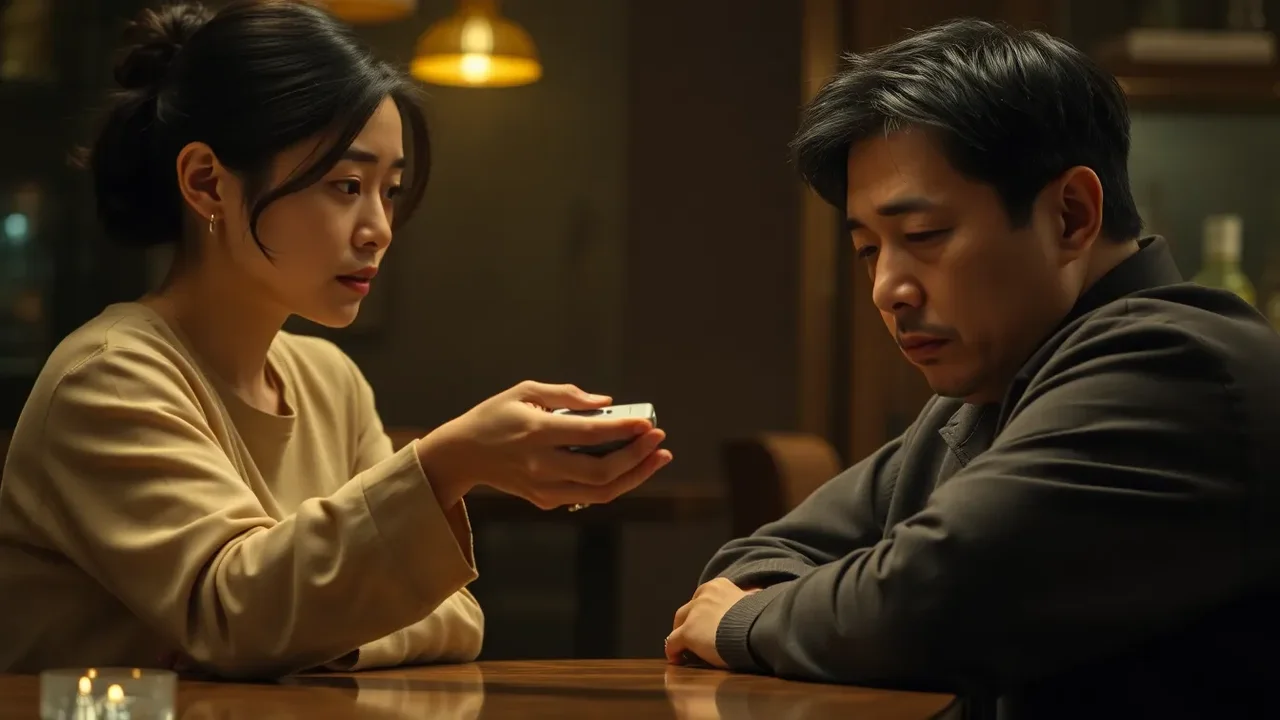
Episode 9 of "My Mister" is universally acknowledged as the episode that fundamentally altered the trajectory of the series. Prior to this episode, the relationship between Lee Ji-an (IU) and Park Dong-hoon (Lee Sun-kyun) was a careful dance of mutual observation and reluctant assistance. Episode 9 strips away the pretense and forces both characters to confront the raw emotions that have been simmering beneath the surface. The episode's director, Kim Won-seok, employs a masterful use of silence and close-up shots to emphasize the weight of unspoken words. The narrative pivot occurs when Dong-hoon, after learning about Ji-an's wiretapping, chooses not to confront her with anger but with a profound sense of understanding. This moment redefines the entire moral framework of the show, shifting from a story of surveillance and suspicion to one of unconditional empathy and redemption.
Character Revelations: The Unmasking of Ji-an and Dong-hoon
One of the most striking aspects of Episode 9 is how it reveals the true vulnerability of its characters. Ji-an, who has been portrayed as a tough, calculating survivor, finally breaks down. The scene where she confesses to Dong-hoon that she has been listening to his private conversations is a masterclass in acting. IU's performance captures the shame, fear, and desperate need for connection. Dong-hoon's response is equally powerful. Instead of reacting with disgust or betrayal, he tells her, "You must have been really lonely." This line is the emotional core of the episode. It signifies that Dong-hoon sees beyond Ji-an's actions to her underlying pain. This revelation changes the power dynamic between them. Ji-an, who had been using her eavesdropping as a tool of control, is now exposed and vulnerable. Dong-hoon, who had been the victim of her surveillance, becomes her protector. This reversal is the key to understanding why Episode 9 is a turning point. It is not just about a secret being revealed; it is about the choice to forgive without condition.
Key Scenes That Redefined the Story
Several scenes in Episode 9 stand out as pivotal moments that changed the narrative. The first is the scene at the bar where Dong-hoon confronts Ji-an about the wiretapping. The lighting is dim, and the camera lingers on their faces. Dong-hoon's voice is calm, but his eyes are filled with sorrow. He asks Ji-an why she did it, and her answer, "Because I wanted to know you," is both a confession and a plea. The second key scene is the rooftop conversation. Here, Dong-hoon shares his own struggles—his failed marriage, his financial burdens, his sense of failure. He tells Ji-an that everyone has a "monster" inside them, but that doesn't mean they are monsters. This scene humanizes both characters. The third scene is the moment when Ji-an returns the recording device to Dong-hoon. She places it in his hand, and he closes her fingers around it. This symbolic gesture indicates that he is entrusting her with his secrets, even after knowing she betrayed him. These scenes collectively shift the narrative from a thriller-like plot of surveillance to a profound exploration of human connection.
- Wiretapping Confession: Ji-an's admission that she bugged Dong-hoon's phone. This moment of vulnerability redefines their relationship.
- Dong-hoon's Response: His choice to forgive and understand rather than punish. This sets a new moral standard for the series.
- Rooftop Sharing: Both characters open up about their deepest pains. The episode becomes a mutual confession.
- Symbolic Return of the Device: Dong-hoon gives the recording device back to Ji-an, symbolizing trust and acceptance.
Symbolism and Themes in Episode 9
Episode 9 is rich with symbolism that reinforces its thematic shift. The recurring motif of eavesdropping is transformed from a tool of manipulation to a metaphor for the desire to truly know another person. The sound of the elevator at Dong-hoon's office building, which has been a constant background noise, takes on new meaning. It represents the vertical movement of their relationship—ascending from suspicion to intimacy. The use of alcohol as a confidant is also significant. The bar scenes are where truths are spoken. Another theme is the concept of "debt" and "payment." Ji-an has been paying off her grandmother's debt, but in Episode 9, she realizes that emotional debts cannot be settled with money. Dong-hoon's compassion creates a new kind of debt—one of gratitude and love. The episode also explores the idea of "seeing" and "being seen." Ji-an has been hiding behind her phone and her tough exterior, but Dong-hoon sees her for who she truly is. This theme of visibility is central to the series' exploration of loneliness and connection.
Impact on Character Arcs: Before and After Episode 9
To understand the scale of change, it is helpful to compare the character arcs before and after Episode 9. The following table illustrates the key differences:
| Character | Before Episode 9 | After Episode 9 |
|---|---|---|
| Lee Ji-an | Secretive, manipulative, uses others for survival. She views Dong-hoon primarily as a target for her surveillance. | Vulnerable, honest, seeks redemption. She begins to see Dong-hoon as a source of genuine support and starts to let go of her defense mechanisms. |
| Park Dong-hoon | Passive, burdened by his family and work, feels trapped. He is kind but distant, unwilling to engage with Ji-an's world. | Active, protective, takes a stand. He chooses to understand Ji-an's pain and becomes her ally. His empathy gives him a new purpose. |
| Their Relationship | Transactional, based on mutual exploitation. Ji-an listens to his secrets; Dong-hoon helps her out of pity. | Emotional, based on mutual healing. They become confidants and surrogate family. The relationship is no longer transactional but transformative. |
This table clearly shows that Episode 9 does not just advance the plot; it fundamentally alters the characters' motivations and their relationship dynamics. The show transitions from a story about a young woman's desperate survival to a story about two people saving each other through empathy.
Practical Directorial Choices That Amplify the Change
The director's choices in Episode 9 are instrumental in conveying the shift. The use of close-ups during the confession scene forces the audience to focus on the micro-expressions of the actors. The sound design is minimal—the ticking of a clock, the hum of the refrigerator—which heightens the tension. The color palette shifts from cold blues and grays to warmer tones as the episode progresses, symbolizing the thawing of emotional barriers. The pacing slows down in the key scenes, allowing the audience to sit with the characters' emotions. These practical techniques ensure that the viewer feels the weight of the moment. Additionally, the episode's script, written by Park Hae-young, uses repetition and callbacks. For example, the phrase "You must have been really lonely" echoes a line from earlier in the series, but now it carries a completely different meaning. This layered writing rewards attentive viewers and deepens the impact of the episode.
How Episode 9 Changed the Series' Thematic Focus
Before Episode 9, "My Mister" was often described as a dark, realistic drama about the struggles of the working class and the ethics of surveillance. After Episode 9, the series became a meditation on the power of kindness and the possibility of redemption. The episode challenges the conventional narrative of betrayal. Typically, a betrayal of trust would lead to conflict and separation. Instead, the show subverts expectations by having the betrayed party offer compassion. This redefinition of the "turn" is what makes Episode 9 so revolutionary. It forces the audience to reconsider their own assumptions about forgiveness and human connection. The series no longer asks "Who is the villain?" but "How can we heal each other?" This thematic shift is sustained throughout the remaining episodes, making Episode 9 the linchpin of the entire series.
Critical Reception and Legacy of Episode 9
Critics and fans alike have pointed to Episode 9 as the moment when "My Mister" transcended its genre. Many reviews highlight that the episode's handling of the wiretapping reveal is a masterclass in dramatic writing. The episode was praised for its refusal to take the easy route of melodrama. Instead, it chose a quiet, deeply human resolution. This approach set a new standard for Korean drama, influencing subsequent works that explore complex moral landscapes. The episode's legacy is that it demonstrated how a drama can be both heartbreaking and hopeful. It showed that the most powerful moments are not loud explosions or dramatic confrontations, but quiet conversations where people choose to be kind.
Impact on Supporting Characters
Episode 9 also affects the supporting characters in subtle but important ways. Park Dong-hoon's brothers, Sang-hoon and Gi-hoon, who have been bickering and struggling, witness their brother's transformation. They begin to see Dong-hoon in a new light, which sets the stage for their own character growth later in the series. Lee Ji-an's friend, Yoon-hee, also undergoes a change. Having been unaware of Ji-an's wiretapping, Yoon-hee's later discovery of the truth is foreshadowed in this episode. The episode also briefly shows the villain, CEO Do Joon-young, who is increasingly suspicious of Ji-an's loyalty. His suspicion is a direct result of the shift in Ji-an's behavior after Episode 9. This creates a ripple effect that drives the plot forward. The episode's careful attention to the ensemble ensures that the narrative change is not confined to the two leads but permeates the entire world of the show.
Practical Analysis of the Episode's Structure
From a structural perspective, Episode 9 follows a classic "point of no return" narrative arc. The first half of the episode builds tension through Ji-an's internal conflict. The audience knows she is about to confess, but the timing is uncertain. The inciting incident occurs at the midpoint when Dong-hoon discovers the wire. The second half of the episode is a series of emotional confrontations and resolutions. The structure is deliberately unbalanced to reflect the chaos of the characters' emotions. The episode also uses a non-linear element: a flashback to Dong-hoon's childhood, which provides context for his capacity for forgiveness. This structural choice deepens the audience's understanding of why Dong-hoon reacts the way he does. The episode's climax is not a physical action but a verbal exchange—the "lonely" line. This is a brave choice that prioritizes emotional catharsis over dramatic spectacle.
The Role of Music and Sound in Episode 9
The soundtrack of Episode 9 plays a crucial role in amplifying the emotional impact. The main theme, "Grown Ups" by Sondia, is used sparingly but effectively. It plays during the rooftop scene, when the characters are at their most vulnerable. The use of silence in the wiretapping confession scene is equally powerful. There are moments where the only sound is the hum of the electronics, emphasizing the artificiality of the surveillance. The natural sounds of the city—traffic, wind, footsteps—create a sense of realism. The director's choice to avoid background music during the most intense moments forces the audience to focus on the dialogue and the actors' expressions. This practical decision enhances the sense of intimacy and authenticity.
Long-Term Consequences for the Series
Episode 9's changes are not temporary; they have lasting consequences. The relationship between Dong-hoon and Ji-an evolves into a deep, platonic bond that becomes the emotional anchor of the series. The wiretapping is no longer a plot device but a foundation for their trust. The episode also introduces a new moral dilemma: Dong-hoon's decision to protect Ji-an puts him at odds with his colleagues and his family. This conflict drives the remaining episodes. The episode's theme of unconditional forgiveness is tested in later episodes when other characters discover the truth. The series maintains its tension by showing that while Dong-hoon and Ji-an have found peace, the outside world is still hostile. This duality keeps the story compelling. The legacy of Episode 9 is that it proves that the most powerful stories are those that choose empathy over conflict.
Episode 9 as a Microcosm of the Series' Message
Ultimately, Episode 9 encapsulates the central message of "My Mister": that human connection can heal even the deepest wounds. The episode shows that true understanding does not require perfect knowledge; it requires the willingness to see someone's pain. This message is delivered through the episode's intricate web of symbols, character choices, and directorial decisions. The episode is a masterclass in storytelling because it trusts the audience to understand the emotional logic. It does not explain why Dong-hoon forgives Ji-an; it shows it through his actions. This is the mark of great writing. For viewers, Episode 9 is a cathartic experience that redefines their relationship with the characters. It is a reminder that television can be a medium for profound emotional exploration. The episode's impact has been so lasting that it is often cited as one of the best episodes of Korean drama in history. Its influence can be seen in later dramas that prioritize character depth over plot twists.
Detailed Scene Analysis: The Bar Confession
Let us examine the bar confession scene in detail. The scene begins with Ji-an approaching Dong-hoon, who is sitting alone. The camera is static, focusing on her face as she sits down. She slides the recording device across the table. Dong-hoon looks at it, then at her. The silence lasts for ten seconds—an eternity on screen. He picks it up, examines it, then puts it down. He speaks softly, asking if she listened to everything. She nods, tears welling up. He asks if she recorded his conversations with his family. She nods again. The camera cuts to a close-up of his hand, which is trembling slightly. He then takes a deep breath and says, "You must have been really lonely." This line is delivered with a mix of sadness and acceptance. The audience sees that Dong-hoon is not angry; he is hurt, but he understands that Ji-an's actions came from a place of desperation. This scene is a perfect example of how the episode uses minimal dialogue and maximum emotional expression.
Cinematography Techniques in Episode 9
The cinematography in Episode 9 uses a variety of techniques to convey the emotional shift. The use of shallow depth of field in the confession scene focuses the viewer's attention on the characters' faces while blurring the background, isolating them from the world. The camera often adopts a low angle when filming Ji-an, making her look smaller and more vulnerable. In contrast, Dong-hoon is often filmed at eye level, suggesting equality. The lighting in the bar scene is low-key, with shadows accentuating the tension. The rooftop scene, however, is bathed in the warm glow of the setting sun, symbolizing the beginning of a new emotional dawn. The director also uses symmetrical framing during the scene where Ji-an returns the device, creating a sense of balance and resolution. These practical cinematographic choices are not arbitrary; they are carefully designed to reinforce the narrative shift.
How Episode 9 Foreshadows the Ending
Episode 9 also contains subtle foreshadowing of the series' conclusion. The theme of forgiveness and acceptance that is established in this episode is revisited in the final episodes. The return of the recording device is a symbolic act that prefigures the eventual resolution of Ji-an's guilt. Dong-hoon's line about "everyone having a monster" is a direct reference to the final scene where Ji-an accepts her past. The episode's emphasis on the idea that people can change is borne out in the characters' arcs. Knowing that Episode 9 is the turning point, viewers can see how the seeds of the ending are planted here. This makes the episode not just a moment of change, but a blueprint for the entire series. The careful construction of the episode ensures that the emotional payoff in the finale feels earned and satisfying.
FAQ - How 'My Mister' Episode 9 Changed Everything
Why is Episode 9 of 'My Mister' considered a turning point?
Episode 9 is the moment when the central secret of the series—Ji-an's wiretapping of Dong-hoon—is revealed and resolved in a way that subverts typical drama tropes. Instead of leading to conflict, Dong-hoon's response of forgiveness fundamentally shifts the story from one of surveillance to a profound exploration of empathy and human connection. This redefines the characters' relationship and the thematic focus of the entire series.
What is the significance of the wiretapping confession scene in Episode 9?
The confession scene is the emotional core of the episode. Ji-an's admission of her betrayal is met not with anger but with Dong-hoon's understanding line, 'You must have been really lonely.' This moment transforms the power dynamic, making Ji-an vulnerable and Dong-hoon her protector. It also serves as a catalyst for the series' shift from a plot-driven thriller to a character-driven meditation on forgiveness.
How does Dong-hoon's response change the series' moral framework?
Dong-hoon's choice to forgive Ji-an unconditionally challenges the conventional narrative where betrayal leads to conflict. His empathy redefines the series' moral stance, moving it away from simple good vs. evil to a nuanced exploration of how understanding and compassion can heal wounds. This change influences all subsequent character interactions and plot developments.
What themes are introduced or intensified in Episode 9?
Episode 9 intensifies themes of loneliness, visibility, and the transformative power of kindness. It introduces the idea that emotional debts cannot be repaid with money, and that true connection requires seeing another person's pain. The episode also explores the symbolism of eavesdropping as a metaphor for the desire to know someone deeply, and uses motifs like the elevator and alcohol to reinforce these themes.
What directorial techniques make Episode 9 so impactful?
The director uses close-ups and minimal sound design to create intimacy, shifts in color palette from cold to warm to symbolize emotional thawing, and slow pacing to allow emotional moments to breathe. The use of silence during the confession scene and the strategic placement of the theme song 'Grown Ups' are also key techniques that amplify the episode's emotional weight.
How does Episode 9 affect the relationship between Ji-an and Dong-hoon?
Before Episode 9, their relationship was transactional and based on mutual exploitation. After the confession and forgiveness, it becomes a deep, platonic bond built on trust and mutual healing. They become confidants and surrogate family, and this new dynamic becomes the emotional anchor for the rest of the series, driving both character growth and plot.
Episode 9 of 'My Mister' is a pivotal turning point where Lee Ji-an's wiretapping of Park Dong-hoon is revealed. Instead of anger, Dong-hoon responds with empathy, forgiving her unconditionally. This moment shifts the series from a thriller about surveillance to a profound exploration of human connection, forgiveness, and redemption, redefining character arcs and thematic focus.
Episode 9 of 'My Mister' is a masterful turning point that redefines the entire series. By choosing empathy over judgment, it transforms a story of surveillance into a profound meditation on human connection. The episode's careful use of symbolism, directorial choices, and character development sets a new standard for dramatic storytelling. It remains a landmark moment in Korean drama, proving that the most powerful narratives are those that show us the beauty of forgiveness and the healing power of being truly seen.