The Core of the Debate: Fidelity vs. Reinvention
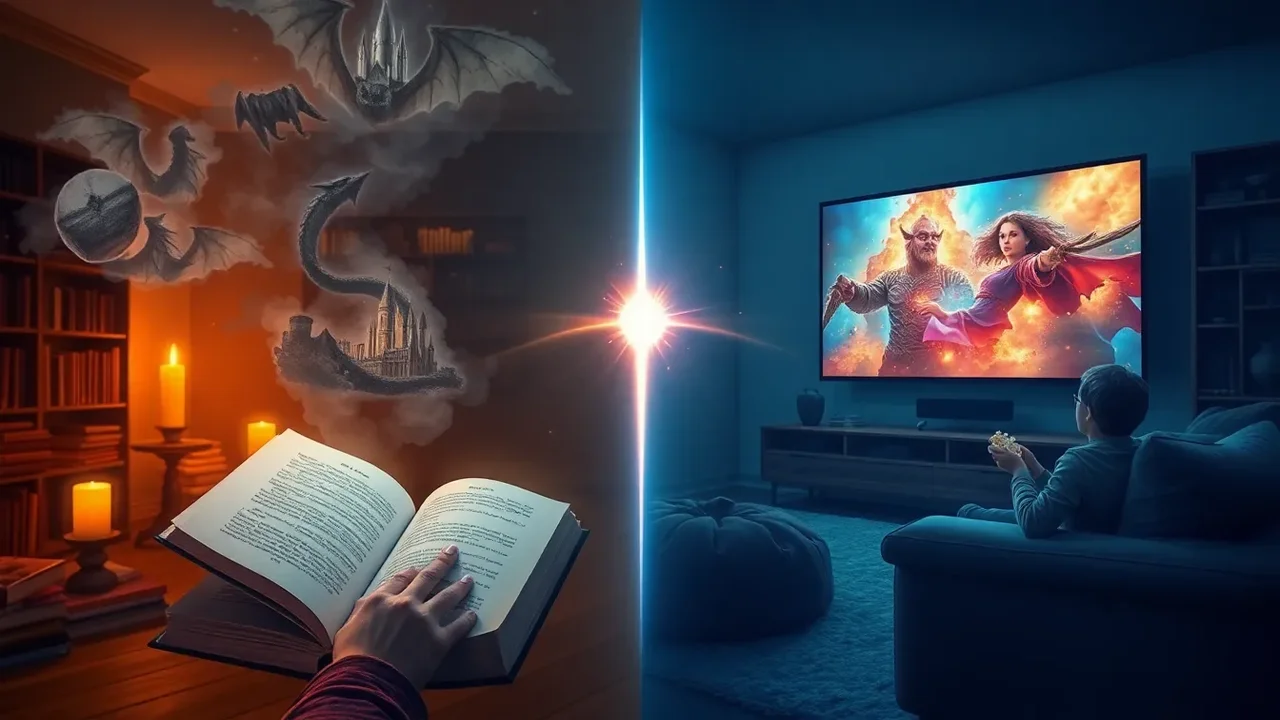
When a beloved novel is adapted for the screen, the internet inevitably splits into two camps: readers who demand absolute fidelity and viewers who judge the work purely on its cinematic merits. This friction fuels the novel adaptation debate. At its heart, the conflict is about what a story fundamentally is. For readers, the novel is a complete, internally experienced world where every sentence has been chosen deliberately. For viewers, the film or series is a new artwork that must stand alone, regardless of its source material. Readers often feel a sense of ownership over the story, having spent hours constructing the characters and settings in their imagination. Viewers, by contrast, are encountering the narrative fresh, often with no prior expectations, and evaluate the adaptation on coherence, emotional impact, and visual appeal. The central question is not whether changes are made, but whether those changes serve the story's original spirit or betray it.
Internal Monologue and the Problem of Subjective Narration
One of the most significant structural differences between novels and screenplays is the treatment of interiority. Novels can spend pages inside a character's head, revealing every nuance of thought, memory, and motivation. Screen narratives rely on external action, dialogue, and facial expression. This forces adaptation to translate subjective experience into observable behavior. For example, in F. Scott Fitzgerald's The Great Gatsby, Nick Carraway's moral judgments and melancholic reflections are as important as the plot. Baz Luhrmann's 2013 film relies on voice-over and exaggerated visual symbolism to approximate that interiority, but many readers felt it missed the quiet, restrained tragedy of the novel. Conversely, screenwriter-heavy adaptations like Gone Girl (from Gillian Flynn's novel) use dual narratives and crafted performances to make internal deception visible. Yet the debate persists: can any visual portrayal of a character's thoughts equal the raw intimacy of prose?
Pacing, Structure, and the Tyranny of Runtime
Novels are long by design; they can meander, build slowly, and introduce subplots that serve thematic depth rather than plot progression. Films and television series operate under strict time constraints, requiring narrative efficiency. This leads to one of the most common controversies: the cutting of beloved scenes. For instance, readers of Stephen King's The Stand were disappointed by the 1994 TV miniseries' inability to capture the novel's epic, sprawling character arcs. More recently, adaptations like Dune (2021) have split a single novel into two films to preserve pacing, but that choice itself becomes a debate topic. Television, with its longer runtime, offers a middle ground. Shows like Game of Thrones and The Expanse expanded on novel events, adding new dialogue and characters to serve the serialized format. Yet even those adaptations were criticized when they diverged from the books. The tension is unavoidable: a film cannot be a 400-page novel, and every cut or compression is a potential betrayal to someone.
Visual Spectacle and the Reader's Imagination
Readers often argue that their imagination's rendering of a world is superior to any filmmaker's CGI. This is not an arrogant position; it is a recognition that reading is a co-creative act. When a novel describes a castle, each reader visualizes it differently, drawing on personal experiences of architecture, film, and art. A film, by contrast, fixes a single interpretation onto the screen. The reader who imagined Hogwarts as a towering, crumbling stone castle may feel jarred by the polished, majestic version in Harry Potter films. Conversely, viewers who never read the books have no such prior image; they simply accept the visual design. This explains why audience scores and critic scores often diverge for adaptations. A viewer's primary metric is 'does it look and feel cinematic?' while a reader's metric is 'does it match the book in my head?' The 2005 adaptation of The Lion, the Witch and the Wardrobe received praise for its visual effects, but die-hard C.S. Lewis fans were divided over the portrayal of Mr. Tumnus, who in the book is described with a certain faun-like charm that the film's prosthetics did not fully convey. Visual fidelity matters, but so does the emotional resonances of the moving image.
Character Portrayal: The Casting Couch of Controversy
Casting announcements are perhaps the most reactive flashpoint in adaptation debates. Readers have spent hundreds of pages constructing a character's face, voice, and body language. When an actor is cast, that private image is overwritten. The process can be jarring, even if the actor is objectively talented. For example, in the Harry Potter series, many readers initially objected to Daniel Radcliffe as Harry because he had green eyes in the book, and Radcliffe's are blue. Others were upset that Hermione (described as having bushy brown hair and large front teeth) was played by Emma Watson, who is conventionally glamorous. The debate is not merely superficial; it concerns character essence. In The Hunger Games, the casting of Amandla Stenberg as Rue was praised for matching the book's description, while the casting of Jennifer Lawrence as Katniss was criticized by some for being too beautiful and physically robust. Viewers who have not read the books often wonder what the fuss is about. They evaluate performance, chemistry, and presence. Readers evaluate ontological fidelity: is the actor the character, or a replacement?
Practical Information for Aspiring Adaptations
For writers, producers, and directors engaged in adaptation, several practical guidelines can help bridge the reader-viewer divide. The first is to identify the central theme of the novel and make every screen decision support that theme. If a subplot is cut but the theme remains intact, readers may forgive the loss. If a character is merged or a scene changed to enhance the theme, the adaptation can feel like a genuine interpretation rather than a betrayal. Second, use the visual medium's strengths. A novel can describe the smell of a city in one sentence; a film can show a montage of street life and convey the same richness. Third, consider the audience for the adaptation. A faithful adaptation of a classic may satisfy readers but bore mainstream viewers. Conversely, a radical reimagining like The Scorch Trials (based on James Dashner's novel) can alienate readers while appealing to action-movie crowds. The best adaptations, according to many critics, manage a balanced approach: they honor the book's soul, but freely adapt its letter. The examples of To All the Boys I've Loved Before and The Queen's Gambit (adapted from Walter Tevis's novel) demonstrate that joyful adaptations can expand the story's audience without losing core appeal.
A Comparative Look: Readers vs. Viewers
Understanding the fundamental differences between these two audiences can clarify the debate. Below is a table summarizing their typical priorities and reactions:
| Aspect | Readers' Priority | Viewers' Priority |
|---|---|---|
| Story source | The novel is sacred scripture | The film is the primary text |
| Character expectations | Must match internal headcanon visually and behaviorally | Must be compelling and well-acted |
| Pacing | Prefer slow burn with full subplots | Prefer dynamic scenes and clear momentum |
| Changes | Perceived as betrayal or misreading | Evaluated for narrative effectiveness |
| Emotional engagement | Derived from interiority and thematic depth | Derived from visual spectacle and performance |
| Tolerance for ambiguity | High; can handle complex symbolism | Low; need clarity in plot and motivation |
Common Changes That Spark Controversy
While every adaptation is unique, certain patterns of change recur in the debates. The following list highlights the most frequently cited points of contention:
- Character merging and removal: When producers combine two minor characters to save runtime, readers often lose a favorite side story.
- Ending alterations: Changing the ending, even to make it more hopeful or open, is considered the ultimate betrayal by many readers.
- Dialogue simplification: Iconic lines from the novel are sometimes rephrased for modern ear, causing reader backlash.
- Point-of-view shifts: If the novel is first-person and the film uses a third-person omniscient camera, the sense of intimacy is lost.
- Modernization and topical updates: Updating setting or themes for contemporary relevance can feel forced to purists.
- Expansions and added scenes: Adding material not in the book, often to flesh out a secondary character, can be praised or resented depending on execution.
Each of these changes can be implemented gracefully or clumsily. The debates ultimately center on intention and execution, and the same change can be celebrated in one adaptation and condemned in another.
Examples of Success and Failure in Adaptation Debates
Perhaps the most instructive examples come from franchises that have been adapted multiple times. The Sherlock Holmes stories, for instance, have been reinvented countless times. From Basil Rathbone's classic interpretations to Robert Downey Jr.'s action-filled version and Benedict Cumberbatch's modern-day Sherlock, each adaptation has drawn both ire and admiration. Readers of Arthur Conan Doyle's stories often argue that the modern versions are too cynical or too sentimental, while viewers enjoy the clever reinterpretation. Another powerful case is The Lord of the Rings. Peter Jackson's films are widely regarded as exemplary adaptations, yet they made significant changes: Tom Bombadil was cut entirely, Arwen's role was expanded, and Faramir's character arc was altered. Many readers initially objected, but the films' critical and commercial success eventually softened many criticisms. This illustrates a key point: a successful adaptation can reshape the fandom's collective memory of the book itself, creating a hybrid text. That we can now discuss Game of Thrones season 8 in the same breath as George R.R. Martin's novels is a testament to how powerful screen narratives can become, for better or worse.
The Role of the Author's Involvement
A common marker of reader trust is the level of authorial involvement. When the original author serves as a consultant or screenwriter, readers are more forgiving. Stephen King wrote the teleplay for the 1994 The Stand and the 1976 Carrie (though the film was not faithful), and many fans appreciate those adaptations as 'author-approved' even when they diverge. Conversely, when the original author has publicly distanced themselves from the adaptation, as with Stephen King's dislike of Stanley Kubrick's The Shining, readers feel vindicated in their complaints. Viewers, however, may not care about the author's opinion. They judge the film as an independent entity. Thus, the debate often revolves around authority: who owns the story? The author, the adaptation team, or the audience? The answer is nuanced, but understanding this power dynamic helps explain why readers and viewers frequently talk past each other.
The future of adaptation debates is likely to become more complex with streaming services providing extended episodes and limited series. The Harry Potter television series currently in development has already sparked arguments about whether a more faithful episode-by-episode adaptation is desirable. Some readers want a scene-for-scene recreation, while others worry that such a format will result in padded, lifeless hours of content. Viewers who have never read the books may simply want a compelling fantasy saga. As media evolves, the debate remains a live, breathing conversation about what stories mean to us and how we share them with others.
FAQ - Readers vs Viewers: Novel Adaptation Debates
Why do readers often dislike movie adaptations even when they are critically acclaimed?
Readers have an intimate, personal connection to the novel, having shaped characters and settings in their own imagination. When a film fixes a single interpretation, it can feel like a violation of that private world. Additionally, novels have the luxury of lengthy interior monologues and subplots, which are often trimmed or eliminated in adaptation, causing a loss of depth and nuance that readers value.
Can a viewer who has not read the book truly judge an adaptation fairly?
Yes, but they are judging a different thing. Viewers judge the film as a standalone visual narrative. They care about pacing, acting, cinematography, and emotional engagement. Without prior knowledge of the source, they cannot compare fidelity, but they can assess whether the adaptation works as a coherent story on screen. Fairness depends on what criteria are being applied.
What is the most common source of conflict in adaptation debates?
Plot changes and character portrayals. Cutting or merging characters, altering endings, and casting actors who look different from the book descriptions are the top triggers. However, the underlying tension is about narrative authority: readers believe the book's story is the definitive version, while creators see the adaptation as a legitimate reinterpretation.
Do adaptations ever improve on the original novel?
Occasionally, yes. Some adaptations tighten loose subplots, clarify confusing themes, or update outdated aspects. For instance, 'The Shawshank Redemption' is widely considered richer than Stephen King's original novella. However, this is subjective. Many readers prefer the original's simplicity, while viewers appreciate the expanded screen version.
Why do some authors love the adaptation process while others hate it?
Authors often have varied experiences depending on their creative control and trust in the adaptation team. Some see adaptation as a collaborative opportunity to re-imagine their story for a new medium, as J.K. Rowling did. Others feel their work is being diluted or corrupted, as Stephen King expressed about certain early films. Authorial involvement is a key factor.
What makes a novel adaptation successful for both readers and viewers?
A successful adaptation for both groups typically balances fidelity with cinematic necessity. It must capture the emotional core and thematic depth of the novel while taking advantage of visual storytelling. Practical strategies include using strong voice-over for interiority, careful casting that respects key physical traits, and consulting the original author when possible. Such adaptations are rare but celebrated, like 'The Lord of the Rings'.
The 'Readers vs Viewers: Novel Adaptation Debates' centers on fidelity, internal monologue, visual spectacle, and character portrayal. Readers demand closeness to the source, while viewers evaluate cinematic merit. Success requires balancing thematic integrity with visual storytelling. This guide explores practical adaptation challenges and examples from popular franchises.
In the end, the debate between readers and viewers is not a war to be won, but a dialogue that enriches our understanding of storytelling. Novels and films are fundamentally different languages, each with unique strengths and limitations. Readers bring a legacy of imagination and personal connection, while viewers bring a fresh perspective and an openness to reinterpretation. When we acknowledge that an adaptation is neither a replacement nor a betrayal, but a new artwork in dialogue with its source, we can appreciate both the original text and the screen version. The best adaptations honor the novel's spirit, while also taking bold steps to make it speak to a contemporary audience. As media continues to evolve, this debate will remain a vital testament to the enduring power of stories to inspire, challenge, and connect us across all forms.