The Journey from Webtoon to Screen
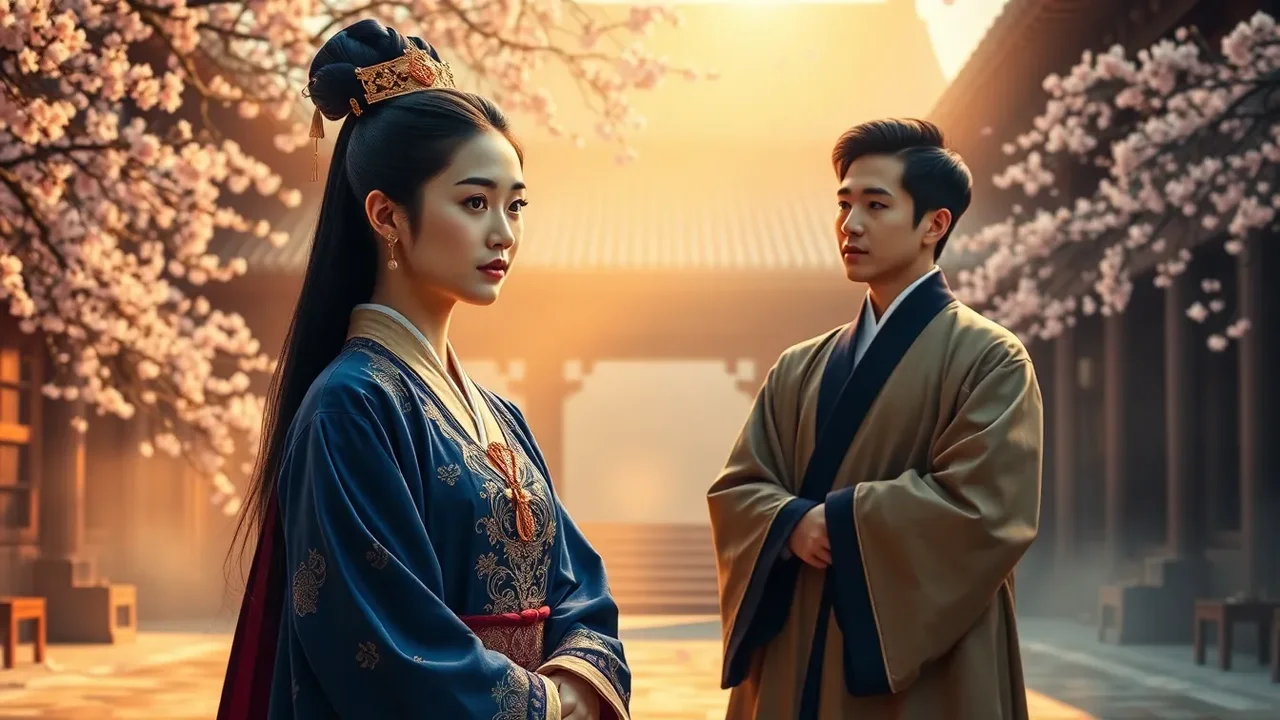
The Korean drama The King's Affection (also known as Yeonmo) is a remarkable adaptation of a popular webtoon of the same name, written and illustrated by Lee So-young. The original webtoon, which debuted on Naver Webtoon in 2018, quickly gained a massive following for its unique blend of historical romance, gender-bending intrigue, and emotional depth. The webtoon's success was not just limited to Korea; it was translated into multiple languages and garnered millions of views worldwide. The announcement of a drama adaptation in 2020 created immense anticipation, and the series finally aired on KBS2 from October to December 2021, starring Park Eun-bin and Rowoon. The transition from illustrated panels to live-action required careful consideration of narrative pacing, character development, and visual storytelling, resulting in a production that honored the source material while making necessary adjustments for the small screen.
The webtoon's premise is both compelling and complex: a crown prince is raised as a girl after her twin brother dies, and she must conceal her true identity to survive. This core concept was preserved in the drama, but the adaptation expanded secondary storylines and deepened character motivations to fit a 20-episode format. The creative team, led by director Song Hyun-wook and writer Han Hee-jung, worked closely with the original author to ensure faithfulness to the spirit of the work. Lee So-young herself praised the drama for its casting and emotional resonance, noting that the actors brought new dimensions to her characters.
Plot Synopsis and Core Themes
The story is set in the fictional Joseon-era kingdom of Daejang, where the Queen gives birth to twins—a boy and a girl. In a society that values male heirs above all, the birth of a girl is considered a curse, and the Queen is forced to hide the daughter's existence. Years later, the twin brother, the crown prince, is murdered, and his sister, Lee Hwi, is compelled to take his place, disguising herself as a man. As she navigates court politics, she falls in love with her tutor, Jung Ji-woon, who is unaware of her true gender. The drama explores themes of identity, sacrifice, and the fluidity of gender roles. It poses questions about what it means to be a ruler, a lover, and a person trapped between two worlds.
Beyond the romantic plot, the drama delves into the corrupting nature of power, the bonds of family, and the cost of secrets. Lee Hwi's struggle to maintain her disguise while ruling justly is a constant source of tension. The supporting characters—such as the ambitious concubine, the loyal eunuch, and the scheming ministers—add layers of political intrigue. The drama also touches on modern issues like self-acceptance and the courage to live authentically, making it resonate with contemporary audiences despite its historical setting.
Key Differences Between the Novel and the Drama
Adapting a webtoon into a television series inevitably involves changes. The following table outlines the most significant differences between the original webtoon and the K-drama adaptation:
| Aspect | Webtoon (Novel/Manhwa) | Drama |
|---|---|---|
| Character Ages | Lee Hwi and Jung Ji-woon are in their late teens. | Aged up to mid-20s to allow for more mature themes and casting. |
| Lee Hwi's Personality | More stoic and reserved, with internal monologues. | More expressive and emotionally vulnerable, showing a wider range of feelings. |
| Romance Development | Slower burn, with more focus on longing glances and internal conflict. | Faster progression, with more explicit romantic scenes and physical closeness. |
| Supporting Characters | Some characters are less developed, e.g., the eunuch Hyun-seok. | Expanded roles for supporting cast, including a deeper backstory for the concubine and the king. |
| Ending | Open-ended with a hint of future happiness. | More definitive happy ending, with a time skip showing the couple's life together. |
These changes were made to suit the episodic nature of television and to appeal to a broader audience. For instance, the drama added a subplot about a plague that tested the kingdom's resilience, which was not present in the webtoon. This allowed for more action and suspense. The writer also softened the tragic elements of the original, ensuring that the drama concluded on a hopeful note. Fans of the webtoon generally appreciated the adaptation, though some purists missed the nuanced internal conflicts that the webtoon's art and text could convey.
Casting and Character Portrayals
The casting of Park Eun-bin as Lee Hwi was a masterstroke. Known for her versatility, Park Eun-bin had to portray a woman pretending to be a man, while also showing the character's inner turmoil and growth. Her performance was widely praised for its subtlety—she used different vocal tones, postures, and facial expressions to distinguish between the public crown prince and the private Lee Hwi. Rowoon (Kim Seok-woo) played Jung Ji-woon, the gentle tutor who falls in love with the prince. His character arc from naive scholar to devoted lover was convincingly portrayed. The chemistry between the two leads was a major factor in the drama's success.
- Park Eun-bin as Lee Hwi / Dam-i: The crown prince in disguise. Her ability to convey both strength and vulnerability earned her the Best Actress award at the KBS Drama Awards.
- Rowoon as Jung Ji-woon: The royal tutor and love interest. His performance brought warmth and sincerity to the role.
- Nam Yoon-soo as Lee Hyun: The king's loyal eunuch and confidant. His comedic timing and emotional depth added balance.
- Chae Won-bin as Yoon Yeo-ji: A strong-willed noblewoman who becomes a friend to Lee Hwi. Her character provided a feminist perspective.
- Bae Soo-bin as King Seongjong: The conflicted father figure. His portrayal of a ruler torn between duty and love was nuanced.
The supporting cast also included seasoned actors like Lee Il-hwa as the Queen Dowager and Kim Min-sang as the villainous minister, each adding gravitas to the production. The director encouraged improvisation during rehearsals, which led to naturalistic interactions and memorable moments.
Production and Historical Accuracy
The drama was filmed at historical sites and specially built sets that recreated the grandeur of the Joseon dynasty. Costume designers meticulously crafted hanboks that reflected the characters' status and personality. For instance, Lee Hwi's royal robes were often in deep blues and purples, symbolizing authority, while her private attire was softer in color to hint at her femininity. The use of lighting and camera angles helped convey the duality of the protagonist's life—bright, open spaces for public appearances and dim, confined rooms for private moments.
While the drama is not strictly historically accurate, it draws on real Joseon-era practices such as the strict gender segregation and the role of eunuchs. The fictional kingdom of Daejang allowed the writers to take creative liberties without offending historical purists. The palace set was designed with attention to detail, including the throne room, the royal library, and the women's quarters. The production also used CGI sparingly for scenic landscapes and crowd scenes.
Impact and Reception
The King's Affection achieved impressive ratings, peaking at over 12% nationwide, and was a hit on streaming platforms like Netflix and Viki. It received multiple awards, including Best Drama at the KBS Drama Awards and the Seoul International Drama Awards. The drama's popularity extended beyond Korea, particularly in Southeast Asia, the Middle East, and Latin America, where it was praised for its universal themes of love and identity. Social media was abuzz with fan theories, fan art, and discussions about the gender-bending trope.
The drama also had a cultural impact: it sparked renewed interest in historical Korean dramas and webtoon adaptations. Many viewers were introduced to the original webtoon through the drama, leading to a surge in readership. The soundtrack, featuring songs like “If I Could Be with You” by Kim Jong-kook and “Love Is” by Punch, became chart-toppers. The drama's success proved that well-crafted adaptations can satisfy both existing fans and new audiences.
Practical Information for Fans
For those who want to experience the story in its original form, the webtoon Yeonmo is available on Naver Webtoon and various English-language platforms such as Webtoon and Tappytoon. The drama is available on Netflix (in select regions) and KBS World. Fans have created extensive online communities on Reddit, Discord, and Twitter, where they discuss episode analyses and character arcs. There are also several fan-made translations of the webtoon, though official translations are recommended for quality.
If you are interested in the creative process, interviews with the cast and crew are available on YouTube and KBS's official channel. The drama's official website offers behind-the-scenes photos and production notes. For those who enjoyed the drama, similar recommendations include The Crowned Clown, Love in the Moonlight, and Mr. Queen, all of which feature identity swaps and historical settings.
FAQ - The King's Affection: From Novel to Hit Drama
Is 'The King's Affection' based on a true story?
No, the drama is a fictional story inspired by the webtoon 'Yeonmo'. It is set in a fictional Joseon-era kingdom called Daejang and does not depict real historical figures or events.
What are the main differences between the webtoon and the drama?
The drama ages up the characters, expands supporting roles, accelerates the romance, and adds a more definitive happy ending. The webtoon has a slower pace and a more open-ended conclusion.
Where can I watch 'The King's Affection'?
The drama is available on Netflix (in select regions) and on KBS World. It can also be streamed on platforms like Viki and iQIYI depending on your location.
Who are the main actors in the drama?
Park Eun-bin plays the lead role of Lee Hwi, and Rowoon plays Jung Ji-woon. Other key cast members include Nam Yoon-soo, Chae Won-bin, and Bae Soo-bin.
Does the drama have a happy ending?
Yes, the drama concludes with a happy ending where Lee Hwi and Jung Ji-woon reunite and live together, with a time skip showing their life as a couple.
Is the original webtoon worth reading after watching the drama?
Absolutely. The webtoon offers a different experience with more detailed internal monologues and a slightly different plot. Many fans enjoy both versions for their unique strengths.
'The King's Affection' adapts the webtoon 'Yeonmo' into a hit K-drama about a crown prince raised as a girl after her twin brother's death. Starring Park Eun-bin and Rowoon, the series explores identity, forbidden love, and court intrigue. With high ratings and international acclaim, it remains a standout example of successful webtoon-to-drama adaptation.
The journey of The King's Affection from a beloved webtoon to a hit drama demonstrates the power of thoughtful adaptation. By respecting the source material while embracing the strengths of live-action storytelling, the creative team delivered a series that captivated millions worldwide. The drama not only entertained but also sparked conversations about identity, love, and the courage to be oneself. Its legacy continues through the enduring popularity of the webtoon and the ongoing adoration of fans. Whether you are a longtime reader or a new viewer, the story of Lee Hwi and Jung Ji-woon remains a touching tale of resilience and romance.