Recap of Episode 3: The Makeup Reveal and First Encounters
In both the webtoon and the drama adaptation of True Beauty, Episode 3 marks a turning point where Lim Ju-gyeong's dual life as a makeup expert and her bare-faced reality collide with the people around her. The episode deepens the love triangle between Ju-gyeong, Lee Su-ho, and Han Seo-jun, while also exploring themes of self-acceptance and the pressure to conform to beauty standards. Below is a detailed comparison of the webtoon and drama versions of this episode, highlighting key scenes, character developments, and narrative choices.
Opening Scene: The Morning After
The webtoon opens with Ju-gyeong waking up early to apply her full makeup routine before anyone in her family sees her bare face. This ritual is a central motif in the webtoon, emphasizing her obsession with hiding her natural appearance. In the drama, the scene is similar but includes a comedic moment where her younger brother, Ju-hyuk, accidentally walks in on her while she is still half-asleep, forcing her to quickly cover her face with a pillow. The drama adds more family interaction, showing her mother's concern about her excessive makeup use, which is absent in the webtoon at this stage.
The School Hallway Encounter
Both versions depict Ju-gyeong's nervousness as she walks through school hallways, fearing that someone might recognize her without makeup. In the webtoon, Su-ho sees her from a distance but does not approach her directly; instead, he observes her from the rooftop. The drama, however, has a more direct encounter: Su-ho accidentally bumps into her in the hallway, causing her makeup bag to spill. He helps her pick up the items, and for a brief moment, their eyes meet. This scene establishes their chemistry earlier than in the webtoon, where their first real conversation happens later in the episode.
The Rooftop Scene: A Turning Point
One of the most iconic scenes in Episode 3 is the rooftop meeting. In the webtoon, Ju-gyeong goes to the rooftop to eat lunch alone, as she always does, to avoid being seen without her makeup. Su-ho, who also frequents the rooftop, finds her there. He notices her eating a sandwich and, without any makeup, he recognizes her from the convenience store incident in Episode 1. He does not say anything, but his silent presence makes Ju-gyeong uncomfortable. The drama expands this scene significantly: Su-ho actively engages her in conversation, asking why she eats alone. Ju-gyeong lies and says she prefers solitude, but Su-ho sees through her. He offers her a piece of his kimbap, and she reluctantly accepts. This moment is charged with tension and marks the beginning of their connection.
Han Seo-jun's Introduction
In the webtoon, Han Seo-jun is introduced as a popular and rebellious student who transfers to Ju-gyeong's school. He immediately notices her because of her striking appearance (with makeup). In Episode 3 of the webtoon, Seo-jun's first interaction with Ju-gyeong is when he accidentally bumps into her in the hallway, causing her to drop her books. He picks them up and teases her about being clumsy. The drama introduces Seo-jun differently: he is shown performing on stage at a school festival, singing and playing guitar. Ju-gyeong is in the audience and is mesmerized by his performance. Later, backstage, Seo-jun notices her and asks for her opinion on his song. This change gives Seo-jun a more artistic and charismatic introduction, aligning with the drama's focus on music as a subplot.
The Makeup Removal Scene
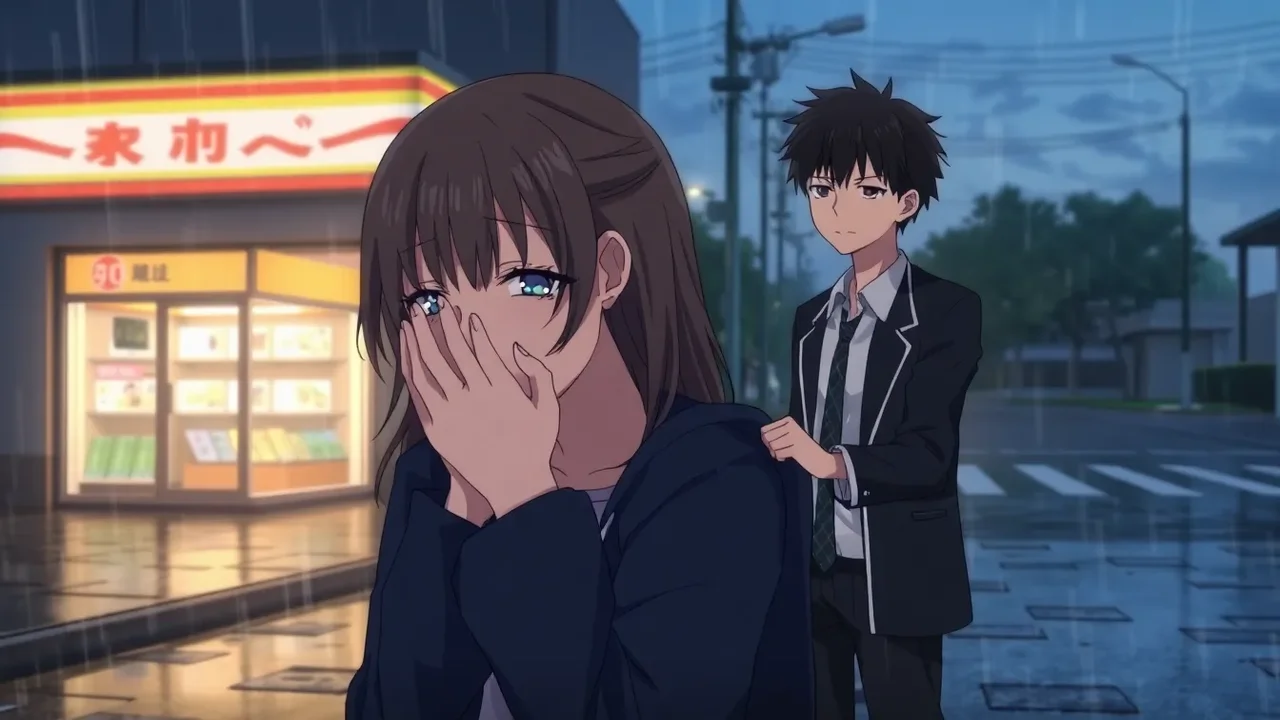
A key difference in Episode 3 is how Ju-gyeong's bare face is revealed to Su-ho. In the webtoon, Su-ho sees her without makeup multiple times before she realizes it. In the drama, the reveal is more dramatic: after a rainstorm, Ju-gyeong's makeup washes off while she is walking home. Su-ho, who is following her (because he is worried about her), sees her bare face and is shocked. He does not recognize her at first, but then realizes it is the same girl from the rooftop. This scene is played for emotional impact, with Ju-gyeong breaking down in tears as she tries to cover her face. Su-ho quietly hands her his jacket and walks away, giving her privacy. The webtoon version of this reveal is more gradual and less traumatic.
Comparison Table: Key Scenes in Episode 3
| Scene | Webtoon | Drama |
|---|---|---|
| Morning routine | Ju-gyeong applies makeup alone; no family interaction | Family interaction; brother walks in, mother comments |
| First hallway encounter | Su-ho observes from distance; no direct contact | Accidental bump; Su-ho helps pick up makeup bag |
| Rooftop lunch | Silent observation; Su-ho recognizes her but says nothing | Active conversation; Su-ho offers food and asks questions |
| Seo-jun introduction | Hallway bump; teasing about clumsiness | School festival performance; backstage compliment |
| Makeup reveal | Gradual; Su-ho sees her bare face multiple times | Rainstorm washes makeup; Su-ho witnesses breakdown |
Character Development Highlights
- Lim Ju-gyeong: In both versions, she struggles with self-esteem. The webtoon emphasizes her internal monologue about her insecurities, while the drama shows her vulnerability through actions (e.g., crying in the rain).
- Lee Su-ho: The webtoon portrays him as more aloof and observant; the drama gives him a warmer, more protective side, as seen when he offers his jacket.
- Han Seo-jun: The webtoon's Seo-jun is a typical bad boy with a playful edge; the drama's Seo-jun is a sensitive artist who uses music to express himself.
The Bullying Subplot
Episode 3 also introduces the bullying subplot that will become central to the story. In the webtoon, Ju-gyeong is bullied by a group of girls who are jealous of her popularity (which she gained through her makeup). The drama shows a different dynamic: the bullies target her because they suspect she is hiding something. In one scene, they corner her in the bathroom and demand to see her bare face. Su-ho intervenes and scares them away, establishing him as her protector. This is a departure from the webtoon, where Su-ho is more passive in such situations.
Differences in Pacing and Tone
The webtoon's Episode 3 is slower and more introspective, focusing on Ju-gyeong's internal conflict. The drama, on the other hand, accelerates the plot by introducing major confrontations and emotional beats earlier. For example, the drama includes a scene where Ju-gyeong's mother finds her bare face and is shocked, leading to a heart-to-heart conversation about beauty and self-worth. This scene does not exist in the webtoon at this point. Additionally, the drama adds a subplot about Su-ho's past trauma (the death of his brother), which is hinted at but not explored in the webtoon until much later.
Practical Information for Fans
If you are a fan of the webtoon and watching the drama, Episode 3 is where the adaptations diverge the most. The drama takes creative liberties to heighten drama and romance, while the webtoon stays true to its slice-of-life roots. To fully appreciate both, consider watching the drama with an open mind and reading the webtoon for deeper character insights. Key moments to look for in the drama: the rain scene (around minute 35), the rooftop kimbap sharing (minute 20), and the festival performance (minute 10). In the webtoon, pay attention to the detailed art of Ju-gyeong's makeup routine and the subtle expressions of Su-ho.
Examples of Dialogue Differences
In the webtoon, when Su-ho first speaks to Ju-gyeong on the rooftop, he says, "You don't have to hide." In the drama, his line is, "It's okay to be yourself." This small change reflects the drama's more direct messaging about self-acceptance. Another example: in the webtoon, Seo-jun's first words to Ju-gyeong are, "Watch where you're going, clumsy." In the drama, he says, "You have good taste in music." These differences shape the characters' personalities.
The Role of Makeup in This Episode
Makeup is a central symbol in both versions. In the webtoon, it is a tool of empowerment and deception. Ju-gyeong uses it to create a new identity and gain social status. In the drama, makeup is also a mask, but the episode emphasizes the pain behind it. The rain scene visually washes away the mask, forcing Ju-gyeong to confront her true self. The webtoon does not have such a symbolic moment in Episode 3; instead, the unmasking happens over several chapters. This makes the drama's version more visually impactful but less nuanced.
Side Characters and Their Roles
Episode 3 introduces several side characters who play important roles later. In the webtoon, Ju-gyeong's best friend, Soo-ah, is shown as a supportive but oblivious friend. In the drama, Soo-ah is more perceptive and notices Ju-gyeong's anxiety. Another character, Kang Min-hyuk (Su-ho's friend), appears in both versions but with different personalities. In the webtoon, he is a comic relief; in the drama, he is a confidant who helps Su-ho navigate his feelings for Ju-gyeong.
Conclusion of the Episode (within the content)
Episode 3 ends with Ju-gyeong feeling more conflicted than ever. In the webtoon, she resolves to avoid Su-ho and focus on her makeup. In the drama, she receives a text from Su-ho asking if she is okay, and she smiles despite herself. The cliffhanger sets up the next episode where the love triangle begins to form. Both versions succeed in establishing the emotional stakes, but the drama's faster pace may appeal to viewers seeking immediate gratification, while the webtoon's slower burn rewards patient readers.
FAQ - 'True Beauty' Webtoon vs Drama Episode 3
What are the main differences between the webtoon and drama in Episode 3?
The drama adds more direct interactions between Ju-gyeong and Su-ho, including a hallway bump and a rooftop conversation. The webtoon keeps Su-ho more aloof. The drama also introduces Seo-jun through a music performance, while the webtoon has a hallway collision. The makeup reveal is more dramatic in the drama (rain scene) compared to the webtoon's gradual reveal.
Does the drama Episode 3 include any scenes not in the webtoon?
Yes, the drama includes a scene where Ju-gyeong's mother sees her bare face and has a heart-to-heart talk. Also, the bullying confrontation in the bathroom with Su-ho's intervention is unique to the drama. The rain scene where makeup washes off is also an addition.
How is Han Seo-jun's character introduced differently?
In the webtoon, Seo-jun bumps into Ju-gyeong in the hallway and teases her. In the drama, he performs a song at a school festival, and Ju-gyeong compliments him backstage. This gives him a more artistic and charismatic introduction.
Which version handles the makeup reveal better?
The drama's rain scene is more visually impactful and emotional, but the webtoon's gradual reveal feels more realistic and allows for character development over time. Fans of drama may prefer the heightened emotion, while webtoon readers may appreciate the subtlety.
Are there any changes to Su-ho's personality in the drama?
Yes, the drama's Su-ho is more proactive and protective. He initiates conversations, offers his jacket, and intervenes when bullies target Ju-gyeong. In the webtoon, he is more passive and observant, only speaking to her after several encounters.
Should I read the webtoon before watching the drama Episode 3?
Not necessarily. The drama stands on its own, but reading the webtoon provides deeper insight into Ju-gyeong's internal thoughts and the original pacing. Watching the drama first may spoil some webtoon surprises, but both are enjoyable separately.
Episode 3 of 'True Beauty' explores Ju-gyeong's struggle with her makeup secret as she encounters Su-ho and Seo-jun. The webtoon emphasizes internal conflict and gradual reveals, while the drama adds dramatic rain scenes, direct conversations, and a music festival introduction, creating distinct but compelling versions of the same story.
Episode 3 of True Beauty in both the webtoon and drama showcases the pivotal moments where Ju-gyeong's secret begins to unravel, setting the stage for romance and self-discovery. The webtoon offers a more introspective and gradual narrative, while the drama amplifies emotional beats and character interactions for a broader audience. Whether you prefer the quiet tension of the original or the heightened drama of the adaptation, this episode is a testament to the story's enduring appeal about beauty, identity, and acceptance.