Comparing True Beauty: Webtoon vs K-Drama
Core Differences in Character Development
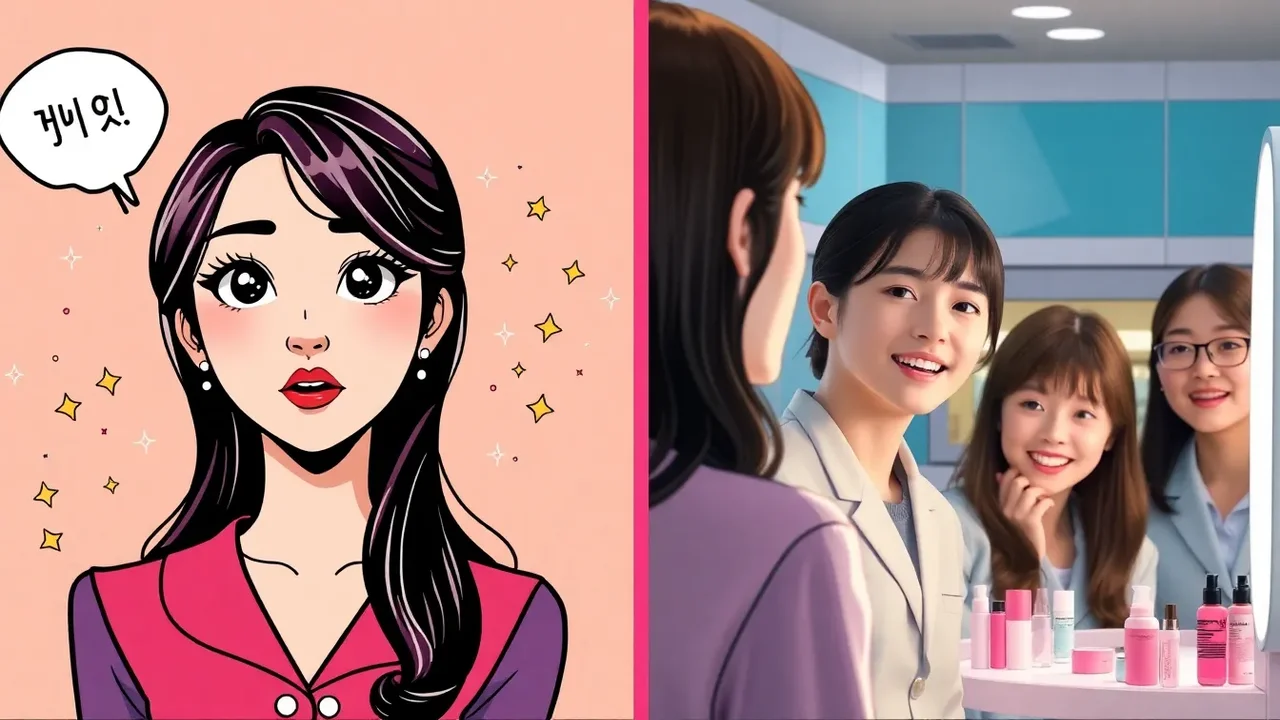
The webtoon True Beauty by Yaongyi offers a more extensive character arc for Lim Ju-kyung, starting from her middle school years where bullying over her appearance drives her to learn makeup. The webtoon spends significant time detailing her internal struggles, her family dynamics, and her gradual acceptance of her natural self. In contrast, the K-drama adaptation, released in 2020 on tvN, condenses this backstory into a few episodes, focusing more on the high school romance triangle between Ju-kyung, Lee Su-ho, and Han Seo-jun. The drama amplifies the love triangle and adds melodramatic elements, such as Su-ho's hidden trauma and Seo-jun's family issues, which are less prominent in the source material.
Plot Divergence and Pacing
One of the most striking differences is the plot structure. The webtoon, still ongoing after 200+ episodes, explores multiple subplots including Ju-kyung's modeling career, her friendship with Kang Soo-jin, and Su-ho's father's backstory. The K-drama, with only 16 episodes, streamlines the narrative by focusing on the high school period and the immediate aftermath. For example, the drama invents a whole storyline about Su-ho's mother abandoning him, which does not exist in the webtoon. Additionally, the webtoon features a longer, slower burn for the romance, while the drama introduces the love triangle by episode 3, creating faster pacing but sacrificing depth.
Visual and Artistic Representation
The webtoon's art style is highly stylized, with characters often drawn with exaggerated features—large eyes, flawless skin, and dramatic expressions. This artistic choice emphasizes the theme of beauty standards, as Ju-kyung's transformation is visually stunning. The K-drama, starring Moon Ga-young as Ju-kyung, Cha Eun-woo as Su-ho, and Hwang In-youp as Seo-jun, relies on realistic portrayal. Moon Ga-young's performance captures the insecurity and growth of the character, but the drama cannot replicate the webtoon's hyper-detailed makeup sequences or the fantasy-like glow of the characters. The drama uses lighting and camera angles to simulate the 'beauty' effect, but it remains grounded in reality.
Key Differences in Major Storylines
Below is a table summarizing how specific story arcs differ between the two mediums:
| Story Element | Webtoon | K-Drama |
|---|---|---|
| Ju-kyung's bullying past | Extended flashbacks over multiple episodes; shows physical assault and social isolation from elementary to middle school. | Brief flashback in episode 1; focuses on a single incident of humiliation in front of a crush. |
| Su-ho's personality | Cold, mysterious, but gradually reveals a playful side; his trauma is related to his father's death. | More openly brooding; his trauma includes a mother who left and a hidden guilt over a friend's accident. |
| Seo-jun's character | Rebellious, hot-tempered, but deeply caring; his backstory includes a troubled home life and a musical career. | Softer, more romantic; his conflict with Su-ho is intensified, and he is given a redemption arc involving his sister. |
| Gang Soo-jin's role | Complex antagonist who later becomes a friend; she struggles with her own insecurities and family pressure. | Simplified as a jealous rival; her redemption is rushed and less convincing. |
| Ending | Ongoing; Ju-kyung becomes a successful makeup artist and reconciles with her natural face. | Closed ending; Ju-kyung and Su-ho get together, Seo-jun pursues music, and Soo-jin moves abroad. |
Character Relationships and Dynamics
The romance dynamics are markedly different. In the webtoon, the love triangle is more balanced, with Seo-jun having a strong chance of winning Ju-kyung's heart. The webtoon readers often debate who the 'better' match is because both Su-ho and Seo-jun have deep, meaningful connections with Ju-kyung. The drama, however, heavily favors Su-ho, making him the clear endgame from early episodes. Seo-jun's role is reduced to a second lead who supports Ju-kyung but never truly competes. Another key relationship is Ju-kyung's friendship with Soo-jin. In the webtoon, their friendship is tested multiple times, with Soo-jin's betrayal being a major arc. The drama simplifies this, making Soo-jin's jealousy appear more petty and less justified.
Thematic Focus
Both versions tackle the theme of inner beauty versus outer appearance, but they emphasize different aspects. The webtoon spends a lot of time on the 'makeup removal' scenes, where Ju-kyung's bare face is shown as a moment of vulnerability and acceptance. It also critiques the beauty industry and societal pressures. The drama, while covering these themes, leans more into the romance and the idea that love can heal insecurities. The drama introduces a subplot about Su-ho's own appearance insecurities (his scarred arm), which is not present in the webtoon, to parallel Ju-kyung's journey.
Practical Information for Fans
For those transitioning from webtoon to drama, here is a list of key episodes or chapters that correspond:
- Webtoon Episodes 1-20 correspond to K-Drama Episodes 1-4: Introduction of Ju-kyung's transformation and meeting Su-ho.
- Webtoon Episodes 50-70 correspond to K-Drama Episodes 5-8: The love triangle intensifies, and the school festival arc.
- Webtoon Episodes 100-120 correspond to K-Drama Episodes 9-12: Ju-kyung's identity is revealed, and Su-ho's past is explored.
- Webtoon Episodes 150-180 correspond to K-Drama Episodes 13-16: The final confrontation and resolution, though the webtoon continues beyond this point.
Fan Reception and Cultural Impact
The webtoon has a massive global following, with over 4 billion views on Naver Webtoon. Its art style and relatable story have made it a phenomenon. The K-drama, while popular, received mixed reviews from webtoon purists who felt the adaptation lost the original's nuance. However, the drama brought new fans to the webtoon, boosting its readership. The drama's soundtrack and Cha Eun-woo's portrayal of Su-ho became viral, while the webtoon's detailed fashion and makeup tutorials inspired real-world trends. Both versions have their merits, but they serve different audiences: the webtoon for those who enjoy slow-burn character studies, and the drama for those who prefer fast-paced romantic comedies.
Technical and Narrative Choices
The webtoon format allows for cliffhangers and weekly releases, which build anticipation. The drama, being a limited series, must resolve conflicts quickly. For instance, the webtoon's 'identity reveal' (where Su-ho sees Ju-kyung without makeup) happens around episode 50, after a long build-up. In the drama, this happens in episode 6, reducing the tension. The drama also adds a 'time skip' of two years, which the webtoon has not yet done. These structural differences highlight the strengths of each medium: the webtoon excels at detailed emotional exploration, while the drama prioritizes visual spectacle and emotional payoffs.
Conclusion
In summary, comparing True Beauty as a webtoon versus a K-drama reveals that both are valuable but distinct experiences. The webtoon offers a richer, more nuanced exploration of beauty standards and self-acceptance, while the drama provides a condensed, emotionally charged romance that appeals to a broader audience. Fans of one should try the other to see how the story evolves in different formats, but they should expect significant changes in pacing, character depth, and plot.
FAQ - Comparing True Beauty: Webtoon vs K-Drama
What are the main differences in the love triangle between the webtoon and the K-drama?
In the webtoon, the love triangle between Ju-kyung, Su-ho, and Seo-jun is more balanced, with Seo-jun having a realistic chance of winning her heart. The drama heavily favors Su-ho as the endgame, reducing Seo-jun's role to a supportive second lead. The webtoon also explores deeper emotional connections with both male leads, while the drama focuses more on Su-ho's backstory and romance.
How does the portrayal of bullying differ in the webtoon versus the K-drama?
The webtoon provides extended flashbacks of Ju-kyung being bullied from elementary through middle school, including physical assault and social ostracization. The drama condenses this into a single humiliating incident in episode 1, making it less intense but still impactful. The webtoon's detailed portrayal allows for a deeper understanding of Ju-kyung's trauma.
Which version has a better character development for Gang Soo-jin?
The webtoon offers more complex character development for Soo-jin, showing her as a multifaceted antagonist who struggles with her own insecurities and family pressure, eventually becoming a friend. The drama simplifies her as a jealous rival and rushes her redemption arc, making her less compelling.
Are there any storylines in the K-drama that are not in the webtoon?
Yes, the drama adds original storylines such as Su-ho's mother abandoning him, a subplot about his scarred arm, and a time skip of two years. The drama also invents a car accident involving Su-ho's childhood friend, which is not present in the webtoon. These additions are designed to heighten melodrama and emotional stakes.
Which medium is better for understanding the theme of beauty standards?
The webtoon is more effective for exploring beauty standards because it dedicates many episodes to Ju-kyung's gradual acceptance of her natural face, includes detailed makeup tutorials, and critiques societal pressures. The drama touches on these themes but prioritizes romance, making the message less nuanced.
Should I read the webtoon before watching the K-drama?
It is not necessary, but reading the webtoon first can enhance your appreciation of the drama by providing deeper context for characters and plotlines. However, be prepared for significant differences, as the drama takes creative liberties. Watching the drama first may also be enjoyable, as it offers a more streamlined story.
Comparing True Beauty webtoon vs K-drama reveals key differences: the webtoon offers deeper character development, a balanced love triangle, and extended exploration of beauty standards, while the K-drama condenses the plot, prioritizes romance, and adds original melodramatic storylines. Both versions have unique strengths, appealing to different audiences.
In conclusion, both the True Beauty webtoon and K-drama offer unique and engaging experiences, but they cater to different preferences. The webtoon excels in detailed character development, slow-burn romance, and a thorough exploration of beauty standards, making it ideal for readers who enjoy depth and nuance. The K-drama, with its fast pacing, visual appeal, and heightened melodrama, is perfect for viewers seeking a romantic comedy with emotional highs. Ultimately, comparing the two reveals how a story can be adapted across mediums, each highlighting different strengths. Fans are encouraged to explore both to fully appreciate the world of True Beauty.